

When you’re feeling low on fuel, it can be tempting to seek out a magic potion for motivation — like one of the many energy drinks on the market, which have been touted as everything from “clean” health tonics to magic bullets for weight loss. But behind the sleek marketing, can energy drinks really be good for you?
In this story
Energy drinks are caffeinated beverages that often contain other stimulants, such as guarana, ginseng, taurine and carnitine, which boost the effects of the caffeine. Vanessa King, MS, RDN, a spokesperson for the Academy of Nutrition and Dietetics, explains that these beverages are commonly used to increase energy, performance and alertness. But while they’re often confused with sports drinks, energy drinks fall under a different category.
“Energy drinks are not considered nutritional,” King says. “They can be included in a balanced, healthy diet, but I wouldn’t consider them alternatives to food [or] meal replacements.”
Advertisement
Lisa Moskovitz, founder of NY Nutrition Group and author of The Core 3 Healthy Eating Plan, says that while energy drinks aren’t inherently healthy, “some are better for you than others. As long as consumed in moderation, they can be part of a healthy diet and lifestyle.”
To further investigate, we asked three dietitians to help evaluate seven popular energy drinks to see how they stack up nutritionally and whether they fit into a healthy diet — or if it’s time to find a better alternative.
A note on supplements
The products included on this list are dietary supplements. Statements about these products have not been evaluated by the Food and Drug Administration. These products are not intended to diagnose, treat, cure, or prevent any disease. Dietary supplements are not appropriate for everyone and may interact with other supplements or medications, so talk to your healthcare provider before adding a dietary supplement to your routine.
What ingredients should you look out for?
Experts say it’s worth scanning the label before you crack open an energy drink.
Advertisement
Advertisement
-
Sugar content: Too much added sugar is linked to obesity, chronic disease and even accelerated aging — and King says sugary beverages are the leading source of added sugars in American diets. Registered dietitian Roxana Ehsani recommends choosing drinks with little to no added sugar — ideally under 5 grams per serving.
-
Sodium content: High sodium intake is associated with elevated blood pressure and a greater risk of heart disease and stroke. The American Heart Association recommends limiting sodium to 2,300 mg per day, with an ideal target of 1,500 mg.
-
Caffeine content: Even low-calorie or sugar-free energy drinks can pack a lot of caffeine. “The major risk … is how easy it is to overconsume caffeine, which can be toxic in higher doses,” Moskovitz says. For most healthy adults, more than 400 mg per day can raise heart rate and blood pressure. King suggests sticking to 150 mg or less per serving so you have room for caffeine from other sources. (For context, an 8-ounce cup of brewed coffee has about 96 mg.)
-
Other active ingredients: Energy drinks aren’t just about energy anymore. Many now include herbs, nootropics and other compounds aimed at boosting focus. These ingredients are generally safe for healthy adults, but some may interact with medications or aren’t recommended if you have certain health conditions.
-
Artificial additives: It can be tough — though not impossible — to find energy drinks without artificial colors or sweeteners. When you can, opt for options with fewer additives. Some artificial sweeteners, like sucralose, have been linked to digestive issues and potential long-term health effects when consumed regularly.
Nutrition stats of seven popular energy drinks
Curious how your favorite energy drink stacks up? Here’s a look at seven popular options and how they compare.
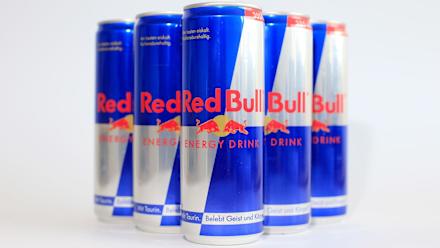
Red Bull Energy Drink
Red Bull does pretty well in the caffeine category; at 80 mg per serving (with one serving per can), it contains slightly less caffeine than a standard 8-ounce cup of coffee.
But it’s much higher in sugar. With 26 grams of added sugar per can, you’re getting about 53% of the recommended daily limit (50 grams). It also has more calories (110) than many other energy drinks.
The added B vitamins are often marketed as a perk, but unless you have a deficiency, they’re unlikely to give you an energy boost. And if you’re already taking a multivitamin or other supplement, you may not need the extra. Vitamin B6, in particular, can be an issue: Even though it’s water-soluble, regularly consuming high amounts has been linked to peripheral sensory neuropathy, which may or may not be reversible depending on the extent of damage.
Advertisement
Advertisement
One more thing to keep in mind: A can of Red Bull is just 8.4 ounces — nearly half the size of many other energy drinks, which typically come in 12- to 16-ounce cans.
Serving size: 8.4 oz. can | Caffeine: 80 mg | Calories: 110 calories | Added sugar: 26 g | Sodium: 105 mg
- Moderate caffeine content
- NSF Certified for Sport
- Naturally sweetened
- High added sugar content
- Artificial flavors
Celsius
Celsius touts that its product has seven essential vitamins, including vitamins C and B12, as well as “natural flavors.” Ehsani explains that natural flavors are natural essences or extractives that come from plants, such as a spice, fruit, vegetable, herb, root or leaf, or even from meat, seafood, eggs or dairy products.
“A lot of people may think that natural flavors are healthy, but just because it’s listed on the label doesn’t make it healthy,” Ehsani says. “It’s just adding flavor [and has] no nutritional value.”
One serving of Celsius Original (or one 12-ounce can) contains 200 mg of caffeine — about the same as two cups of coffee — putting it on the higher end of the caffeine scale compared to other energy drinks. And, as one cardiologist told the Guardian, it also contains ingredients such as taurine and guarana extract, which enhance the effects of caffeine.
Advertisement
Advertisement
It has no added sugar, few calories and less sodium than many other options. But it does contain sucralose, an artificial sweetener.
“Low-calorie and zero-sugar energy drinks have an advantage over traditional versions, as they won’t contribute to rampant blood sugar spikes and crashes,” Moskovitz explains. “The drawback is that many of these brands use artificial sweeteners to lower the calorie and sugar content, which can be bothersome for some people who are sensitive to sweeteners like aspartame and sucralose.”

Getty
Serving size: 12 oz. can | Caffeine: 200 mg | Calories: 10 calories | Added sugar: 0 g | Sodium: 5 mg
- No added sugar
- Low in calories
- Lower sodium content
- Higher caffeine content
- Contains artificial sweeteners
Monster Energy
Monster Energy has one of the highest sodium contents of the bunch, at 370 mg per can — or 16% of your daily recommended intake.
It also contains more calories (230 calories per serving) than many other energy drinks and has a whopping 54 grams of sugar — in other words, more than your total daily recommended amount of sugar in one can.
Advertisement
Advertisement
The caffeine content is 160 mg per 16-ounce serving — the equivalent of about one and a half to two cups of coffee. That’s a bit higher than what experts recommend in a single energy drink, but slightly lower than many other energy drink products.
It’s also important to note that at 16 ounces per can, Monster Energy has the largest serving size compared to other energy drinks. One Monster Energy, for example, is the equivalent of nearly two Red Bulls.

Getty
Serving size: 16 oz. can | Caffeine: 160 mg | Calories: 230 calories | Added sugar: 54 g | Sodium: 370 mg
- Moderate caffeine content
- Higher calories
- High sugar content
- Higher sodium content
- Contains sucralose
Monster Energy Zero Sugar
Like its sugary counterpart, Monster Energy Zero Sugar also has higher sodium content, at 380 mg per 16-ounce can — or 17% of your daily recommended intake — and 160 mg of caffeine per serving.
It has fewer calories and no sugar, but, like many other sugar-free options, it contains artificial sweeteners.

Getty
Serving size: 16 oz. can | Caffeine: 160 mg | Calories: 10 calories | Added sugar: 0 g | Sodium: 380 mg
- No added sugar
- Low in calories
- Moderate caffeine content
- Higher sodium content
- Contains artificial sweeteners
Prime Original Energy drink
With 200 mg of caffeine per 12-ounce can, Prime Original Energy Drink is on the higher end of the spectrum. In fact, Sen. Chuck Schumer called out the brand in a 2023 letter to the Food and Drug Administration (FDA). While that amount can be OK for adults who adjust their overall caffeine intake, experts are more concerned about its popularity among kids and teens, who can experience side effects at lower doses.
Advertisement
Advertisement
It contains 70 mg of sodium — about 3% of the recommended daily limit — putting it in the middle of the pack compared to other energy drinks.
The upside: It’s low in calories and has zero sugar. The trade-off? It relies on artificial sweeteners.

Getty
Serving size: 12 oz. can | Caffeine: 200 mg | Calories: 10 calories | Added sugar: 0 g | Sodium: 70 mg
- Low in calories
- No added sugar
- Higher caffeine content
- Moderate sodium content
- Contains artificial sweeteners
Alani Nu Energy Drink, Pink Slush
Unlike Prime and Monster Energy, which are marketed toward young men, Alani Nu has partnered with celebrities to make a slew of different energy drinks aimed at young women (like Kim Kardashian’s “Kimade,” featuring the reality star posing with dumbbells, workout gear and her trusty energy drink).
Alani Nu Pink Slush, for example, is low in calories and has zero added sugar but does contain artificial sweeteners and 1 gram of sugar alcohol for sweetness.
Advertisement
Advertisement
Of the energy drinks we examined, this one contains higher sodium levels — second only to Monster Energy and Monster Energy Zero Sugar. It’s also on the high end of the caffeine scale, with 200 mg per 12-ounce can (the caffeine equivalent of about six cans of Coke).

Alani Nu
Serving size: 12 oz. can | Caffeine: 200 mg | Calories: 5 calories | Added sugar: 0 g | Sodium: 180 mg
- Low in calories
- No added sugar
- Higher caffeine content
- Higher sodium content
- Contains artificial sweeteners
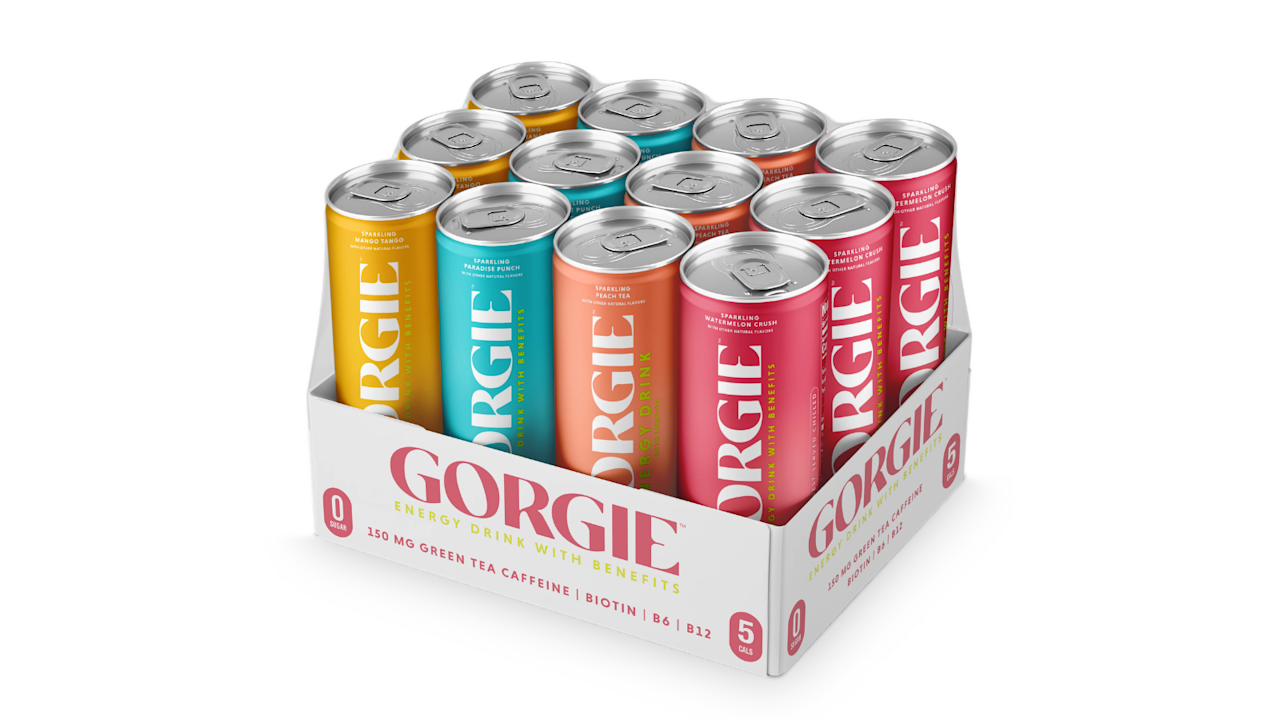
Gorgie Energy Drink
Gorgie is a newer entrant in the energy drink space, marketed primarily toward young women as a “better-for-you” alternative.
It contains zero added sugar and no sodium, and at just 5 calories, it’s one of the lowest-calorie options on the market. Unlike many sugar-free energy drinks, it doesn’t use sucralose; instead, it’s sweetened with stevia. Experts note that while stevia — a plant-derived sweetener — may be a better option for weight management and blood sugar control, some research suggests non-nutritive sweeteners can increase cravings for sweet foods in certain people.
With 150 mg of caffeine per 12-ounce can, Gorgie lands in the moderate range compared to other energy drinks. The brand highlights that its caffeine comes from green tea, but that doesn’t necessarily make it gentler.
Advertisement
Advertisement
“A lot of energy drink companies are getting more creative by sourcing caffeine from teas, herbs and other natural ingredients,” Moskovitz says. “Just keep in mind, no matter where the caffeine is coming from, it can still have side effects if consumed in larger quantities.”
Gorgie
Serving size: 12 oz. can | Caffeine: 150 mg | Calories: 5 calories | Added sugar: 0 g | Sodium: 0 mg
- Moderate caffeine content
- No sodium or added sugar
- Low in calories
- Sweetened with stevia
- Stevia may increase cravings for sweet foods
Energy drink alternatives
If you’re in need of an energy boost, there are plenty of natural alternatives that are actually good for you.
-
Drink water: “When we underhydrate, we lose energy and feel more lethargic,” King says. “Our brains literally shrink when we are dehydrated, as water is pulled out of the brain to other parts of the body.”
-
Eat well: Make sure you get enough high-fiber and protein-rich foods, including lots of fruits and veggies. Ehsani recommends fueling up with a healthy snack, such as an apple and walnuts or Greek yogurt with berries.
-
Have a coffee or tea: It may sound boring, but sticking with classic, unsweetened caffeinated beverages — such as black coffee, black tea or green tea — will help you get your caffeine fix without needing to worry about any mystery ingredients. And unlike energy drinks, coffee and tea have proven health benefits when consumed in moderation, such as a reduced risk of type 2 diabetes, Alzheimer’s disease and certain cancers.
Guayaki
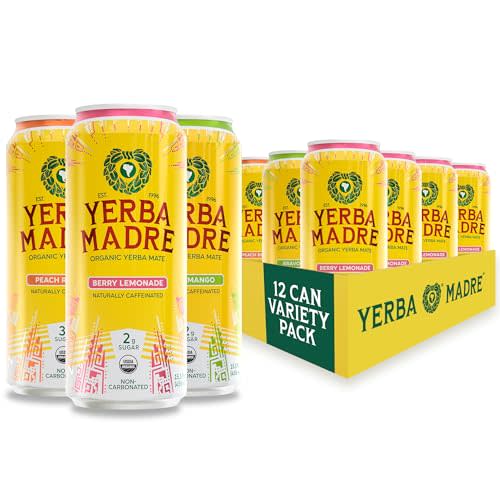
Serving size: 15.5 oz. can | Caffeine: 150 mg | Calories: 15 | Added sugar: 0 g | Sodium: 0 mg
Yerba mate is a traditional South American tea known for its natural caffeine and antioxidant content. You can drink it on its own, but if you want something that feels more like a classic energy drink, Yerba Madre Low-Sugar is a solid option.
Like many other energy drinks, it’s sparkling and contains 150 mg of caffeine per can. Because that caffeine comes from yerba mate, some people find it feels smoother — though it can still cause jitters if you’re sensitive or drink too much.
You’ll also get a dose of antioxidants. Just be sure to opt for the low-sugar version, which is sweetened with stevia leaf extract and natural fruit juice, or go for the unsweetened option. For reference, the regular version can contain 26 grams or more of added sugar per can.
Still craving an energy drink? Our dietitian tested and reviewed 19 energy drinks to find the 9 best options.
Meet our experts
-
Vanessa King, MS, RDN, spokesperson for the Academy of Nutrition and Dietetics
-
Lisa Moskovitz, RD, CDN, founder of NY Nutrition Group and author of The Core 3 Healthy Eating Plan
-
Roxana Ehsani, MS, RD, CSSD, LDN, national nutrition media expert and spokesperson
Our health content is for informational purposes only and is not intended as professional medical advice. Consult a medical professional on questions about your health.