


- Iran is going to grow more desperate as oil money dries up, which makes the country even more dangerous.
- Some under-the-radar energy stocks Goldman Sachs loves.
- Why the U.S. Strategic Petroleum Reserve could be effectively empty soon.
- Energy guru Dan Pickering on when we will see “demand destruction” because of high gasoline prices.
POWER POINT
What I’m hearing from energy insiders
So… what now?
It seems to be the question many in the energy markets are asking. We are about to enter the ninth month of the Iran war. Or Iran “conflict.” At this point, it’s not very clear what to call it. The only thing right now that’s “clear” is that very little is clear.
What we know… now.
Oil is moving through the Strait of Hormuz. Most Gulf nation export volumes are well up from their lows. Iran volumes are the exception. Those are down to the point of almost being nonexistent. From the little information that trickles out of the mostly closed country, it seems the Iranian economy is crumbling. Iran’s currency is losing value, and people I speak with who have family there tell me they are increasingly worried about more economic pain ahead.
Iran has one main source of money: oil. Without oil, there is little money. Without money, there is little ability to buy the weapons, drones, and missiles that cause havoc and spread fear in the Gulf. Iran is going to grow more desperate, which makes Iran even more dangerous. In just the last week or so, multiple ships have been attacked. Iran’s proxy gang – the Yemeni terror group known as the Houthis – has recently killed civilians in Saudi Arabia with attacks on the airport. They also blew up part of Aramco’s headquarters.
The point is this is not just a grim recap of where we stand, but an attempt to understand where we’re going. As I’ve said and written before… I have no idea. I’m not sure that anyone really does. The best we can do is gather as much information and intelligence as possible and make educated guesses. Sorry to say it, but right now, guessing is what many are doing. The markets remain one good or bad headline away from a $10 move in oil in either direction.
While we wait, oil markets stay elevated. The paper price of oil is around $100 per barrel. Most companies and countries don’t use “paper” oil. As I wrote last week, the price of an actual physical barrel of oil is much, much higher than what you see on your screens. In some cases, it may be double.
Another of the few things we are clear on is that demand destruction is not here yet. All prices are up, and demand is staying relatively consistent. Sky-high diesel prices across Europe are going to hit demand, but they have not landed a knockout blow yet. $100 oil and $10 diesel are not what they used to be. Inflation has been a huge part of the global economic story since COVID and the lockdowns. Those were self-imposed, and I would argue that this is as well, because the attacks on Iran — whether you believe them to be just, given that regime’s cruelty toward its own people — were a human decision. Humans got us into this, and humans are going to have to get us out.
It doesn’t appear that we are any closer to a real resolution than we were a few months ago. Shipping costs continue to soar, and insurance is available but expensive.
So… what now?
What now is that we keep as calm as we can and carry on. Every week, I write Power Insider knowing tomorrow could be an entirely different headline. But like it or not, oil is the lifeblood of the global economy. And it will be for decades to come. So the oil must flow. And it is flowing. But at a cost.
Meantime, global markets wait for any scrap of clarity. What little we have will come from corporate earnings and any guidance management can provide. Energy services firm SLB (SLB) is first out of the gate with numbers on October 23. Baker Hughes (BKR) and natural gas exporter Cheniere Energy (LNG) are next. But the real focus comes on October 30, when both ExxonMobil (XOM) and Chevron (CVX) show off their earnings. It’s not rocket science knowing those numbers will be big. Sales will rise with the price of oil. Refining earnings will be even bigger. The biggest piece of news, however, will be whatever glimmer of guidance these companies feel confident enough to provide. My spider sense tells me it won’t be much. While mega oil and gas companies pay for some of the greatest intelligence in the world, even the world’s greatest intelligence gatherers are subject to the whims of rogues with missile launchers.
That’s what’s now… sadly.
Thanks for reading—and watching—and be safe in these crazy and often scary times.
—Brian
THE ACTIONABLE INSIDER
Global markets may be waiting for earnings, but Goldman Sachs isn’t waiting to give clients advice on what to buy now. Neil Mehta and team are out with 10 energy stocks they love now, and I have thoughts.
Let’s dig in.
Neil has loved the refining stocks for a while — a great call — but is now turning his focus to other names. He hasn’t fallen out of love with the refiners; it’s just that so much money has been made that he feels there are better opportunities elsewhere. Here are a few.
On the large-cap side, he loves two companies with new CEOs: ConocoPhillips (COP) and Occidental Petroleum (OXY).
Conoco’s legendary boss, Ryan Lance, has made way for Andrew O’Brien. Neil doesn’t see that as a problem, but is watching two things closely: COP’s huge new Willow project in Alaska and the status of the damaged natural gas plant at QatarEnergy, in which ConocoPhillips is invested.
Occidental also has a new CEO, Richard Jackson, and Goldman recently upgraded the stock to Buy from Neutral with a $69 target. More bullishly, Goldman chose to add OXY to its vaunted “America’s Conviction List.” The company has long been saddled with high debt, but it’s pushing through a new plan to improve cash flow. Investors have been rewarded with a solid 53% gain over the last year, but Neil Mehta sees more to come.
My Take → Energy investors are right to be nervous about oil and gas stocks. The group largely trades with the price of crude, so if we do get a meaningful peace with Iran — a big “if,” I know — oil prices are likely to drop, perhaps meaningfully. I look forward to hopefully speaking soon with the CEOs of both ConocoPhillips and Occidental Petroleum about all of this and more.
Those two are the megacaps. I’d like to now hit on two of the smaller-cap, less-talked-about stocks on Goldman’s golden list.
First, Permian Resources (PR). This is a name you may have heard mentioned a few times recently. Despite the name, Permian operates a big chunk of the Delaware Basin, which is in New Mexico, not Delaware. Get to know oil geography. And get to know free cash flow. Neil and his team see PR’s free cash flow growing around 20% for the next couple of years, benefiting from the company’s shift to more “oil-focused production.” While the analyst team would like to get more “clarity on the company’s outlook for organic oil production growth” and regional pricing, it believes that the current macro environment is a tailwind for Permian Resources.
Also on Goldman’s love list is TC Energy (TRP). The Canadian pipeline company has seen a big pullback in its stock, and that’s one reason Neil and his team like it. They see TRP announcing more U.S. projects and are “more comfortable” with the company’s funding outlook. TC Energy CEO François Poirier has spoken with us on CNBC a few times and expressed frustration about what he calls America’s “underinvestment” in certain energy infrastructure.
My Take → More pipelines are bullish for TRP, but given the upcoming midterm elections in America and a good chance that both houses of Congress shift to Democratic control, the odds of more fossil fuel energy infrastructure being built are likely heading lower, not higher.
We always like to add value here on Power Insider, so here are nine of those ten stocks, ranked by possible upside versus the median Wall Street price target. TC Energy doesn’t have an equivalent price target because it’s listed in Canada.
The last name on that list – H.F. Sinclair – is one to focus on. It’s the only one on the list trading at its median target, and maybe one reason Neil and his team are shifting their focus away from refiners. ‘DINO’ has had an epic run, but after a 138% gain in 12 months, it and other refiners may soon become extinct from new portfolios.
TAKE A LOOK
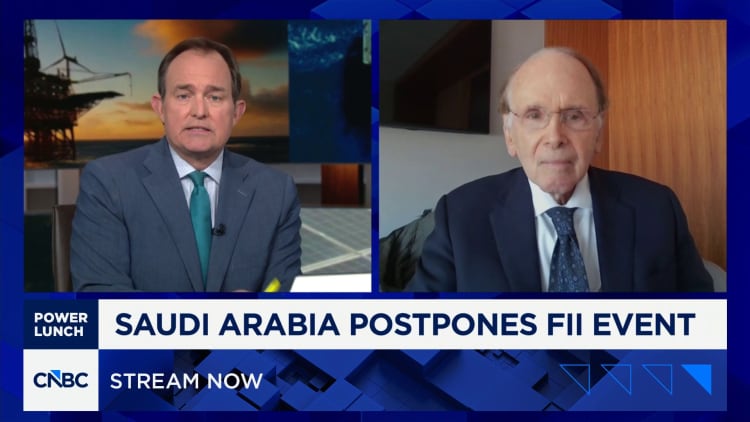
Two key interviews for you to watch this week. First, we spoke with energy legend Dan Yergin about the current state of the Middle East, Russia, diesel and fuel supplies.
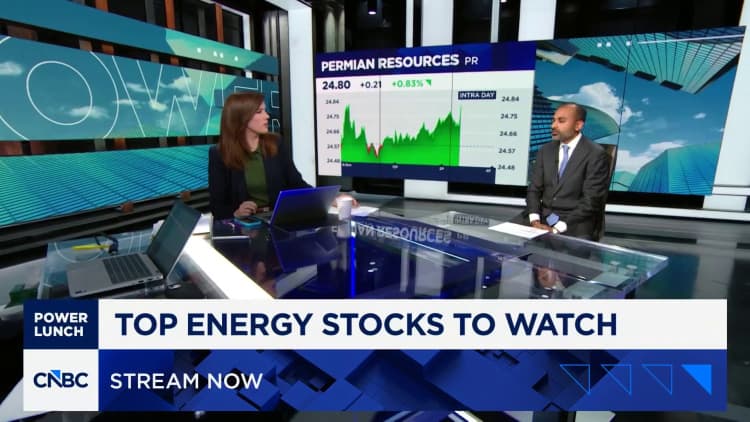
Per The Actionable Insider above, here’s our interview with Neil Mehta about his big oil stock call.
INSIDE LINE
This week’s Inside Line is with Dan Pickering, founder and chief investment officer of Pickering Energy Partners. He has been a friend and great contact of mine for years and is a frequent face on CNBC.
RANDOM, BUT INTERESTING
The U.S. Strategic Petroleum Reserve continues to fall, and it’s now at its lowest level since being filled. The question now is how low it can go before it becomes more difficult — and slower — to remove the oil. Some have suggested to me that when the SPR falls below 300 million barrels, the physics of pulling out the oil changes.
RBI→ The “SPR” is not one facility. It is a collection of old caves around Texas and Louisiana.