
President Trump said Monday that he supports suspending the federal gas tax “for a period of time” to help lower prices at the pump, which have spiked dramatically since the start of the war with Iran.
“I think it’s a great idea,” the president told CBS News during a phone interview. “We’re going to take off the gas tax for a period of time, and when gas goes down, we’ll let it phase back in.”
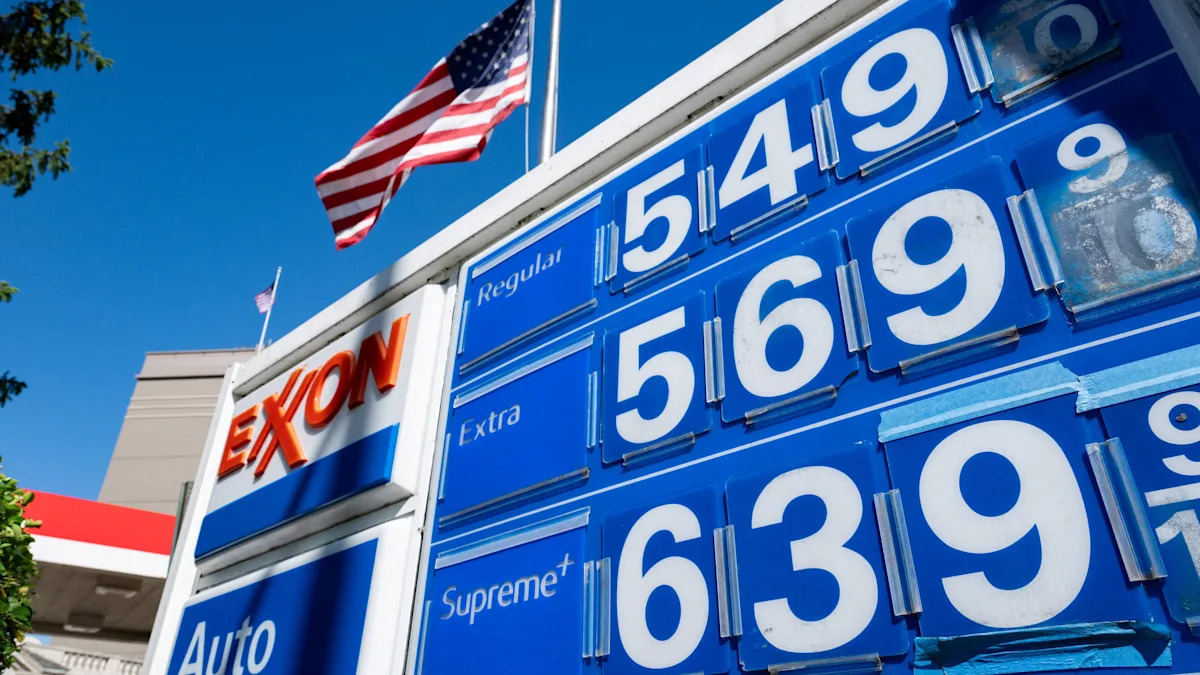
The average national price for a gallon of gas was $4.52 on Monday, according to AAA. That represents a roughly 50% increase from where prices stood shortly before the war started in late February.
Advertisement
Advertisement
Trump’s comments come a day after Energy Secretary Chris Wright told NBC News that the administration was considering suspending the federal gas tax.
“All measures that can be taken to lower the price at the pump and lower the prices for Americans, this administration is in support of,” Wright said. “We’re open to all ideas.”
However, the Trump administration doesn’t have the authority to suspend the gas tax unilaterally. Congress would have to pass a bill for the policy to go into effect. Some Republicans have come forward in support of legislation to pause the gas tax in the wake of Trump’s comments, but it remains to be seen whether the idea has enough bipartisan backing to become law.
If a bill does end up passing, it will only affect the federal gas tax, which is currently about 18 cents per gallon for regular gas and 24 cents per gallon for diesel. State gas taxes, which are nearly 33 cents per gallon on average, would still be in place unless state-level lawmakers take action. Since the start of the war, a handful of states — including Georgia, Indiana and Utah — have taken steps to suspend their gas taxes temporarily. The idea has also been a big subject for debate in the California governor’s race.
What would pausing the gas tax mean?
It’s understandable why lawmakers might propose a gas tax holiday when prices at the pump start to rise. The policy offers a quick and simple way to reduce the cost of a commodity that the entire economy relies upon.
Advertisement
Advertisement
“Suspending the federal gas tax would help bring prices down and give families some much needed relief,” Arizona Sen. Mark Kelly wrote when he proposed a gas tax holiday in March.
Whenever gas prices begin to spike, calls for suspending gas taxes tend to follow. But many experts oppose the idea. The consensus among economists is that it would provide minimal benefit, it wouldn’t address the underlying causes of price increases and it would deny the government much-needed tax revenue.
“In a time of political and economic uncertainty, drivers should be aware that these sorts of gimmicks can be economically harmful,” Adam Hoffer, a tax policy expert with the Tax Foundation, warned last month.
One of the main arguments against a gas tax holiday is that taxes make up a relatively small percentage of the cost of a gallon of gas. If you erased the full cost of the federal gas tax, the average gallon of gas nationwide would still be $4.34, about where it was two weeks ago. Drivers filling up a 15-gallon tank would save $2.70.
Taxes currently make up a much smaller share of the price of gas than they used to. The gas tax hasn’t been increased since 1993, when the average gallon of gas was $1.17. Back then, the 18-cent federal tax represented about 15% of the total price of gas. Now it’s about 4%
Advertisement
Advertisement
Consumers also shouldn’t expect to receive the full benefit of a gas tax suspension. Studies of past gas tax holidays have shown that producers and other companies along the supply chain tend to absorb some of the relief themselves. That means drivers likely wouldn’t see per-gallon prices drop by a full 18 cents if the federal tax were suspended.
Pausing the gas tax also wouldn’t solve the root problem that’s been pushing prices higher and higher. The ongoing conflict with Iran has caused the flow of oil through the Strait of Hormuz, a critical thoroughfare for the global petroleum industry, to essentially grind to a halt. As long as it’s closed, the world’s supply of oil will be constrained and prices are likley to keep climbing. The massive disruptions caused by the war likely mean it will take some time for prices to drop to previous levels, even once the strait does open.
Gas has been increasing by roughly 2 cents per gallon per day since the war began. If the gas tax were suspended today and that rate of increase stayed the same, the per-gallon price would return to its current level by the middle of next week.
What gas taxes pay for
Federal gas taxes go into the Highway Trust Fund, a massive government account that’s used to pay for road construction, highway maintenance and mass transit projects. That fund is already on pace to run out of money by 2028. One recent estimate found that a pause in the gas tax would cost the trust fund $2.5 billion per month.
Advertisement
Advertisement
“A one-month holiday would accelerate trust fund insolvency by roughly two weeks, while a six month holiday would accelerate insolvency by nearly a year,” the Committee for a Responsible Budget wrote in March.
State gas taxes generally go toward highway improvement and other infrastructure projects as well.
With less revenue from gas taxes, governments at the state and federal level would have to decide whether to reduce their infrastructure spending, repurpose funds from elsewhere in the budget or increase other taxes to make up for the shortfall.
When asked about the effects of pausing the gas tax on Sunday, Secretary Wright said, “Everything has trade-offs.”