

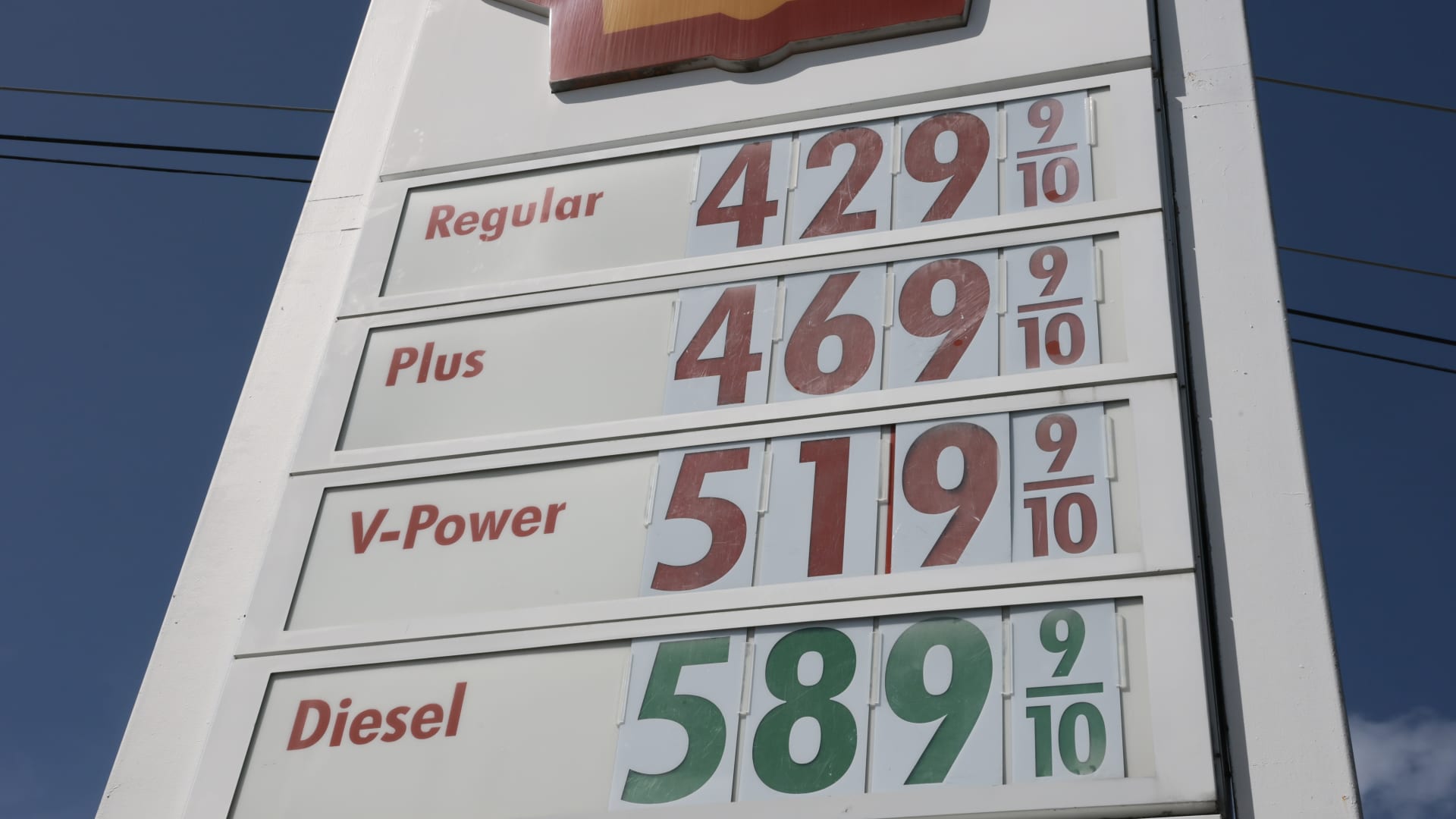
Some “simple math” indicates that oil prices need to rise to balance out the huge supply disruption triggered by the Iran war, JPMorgan analyst Natasha Kaneva wrote in a note this week. Brent oil futures prices have averaged around $100 in April, while the spot price for the delivery of actual cargo has hovered closer to $121 per barrel. Neither are high enough to dampen demand to levels that would balance out the oil supply gap, according to Kaneva. The supply disruption stands at 13.7 million barrels per day (bpd) in April, Kaneva said. Saudi Arabia and the United Arab Emirates would typically ramp up production to narrow the deficit, she said. But they are severely constrained themselves because they cannot export through the Strait of Hormuz due to the war. “Nearly all of the world’s spare capacity is concentrated in Saudi Arabia and the UAE, and it was effectively cut off from global oil markets, stripping the industry of its traditional shock absorber,” Kaneva said. Why prices should rise With spare capacity in the Middle East constrained, nations are drawing down commercial and strategic inventories by some 7.1 million bpd in April, the analyst estimated. That cuts the supply gap to 6.6 million bpd globally. Demand is also expected to fall by 4.3 million bpd in April, with those losses concentrated in the Middle East, the epicenter of the war, and Asia, due to its dependence on Gulf crude, Kaneva said. “What is striking is that these losses have occurred at prices that do not appear extreme by historical standards,” the analyst said. Physical shortages, rather than prices, are likely constraining consumption in those regions, she said. The 4.3 million bpd in reduced demand in April cuts the supply gap from 6.6 million bpd down to 2.3 million bpd. But emerging economies will not be able to balance the remaining 2.3 million bpd deficit alone, Kaneva said. “In practical terms, Europe and the U.S. would also need to participate,” Kaneva said. “For that to happen, prices would likely need to rise further.” Europe is already facing tight diesel and jet fuel markets, the analyst said. The U.S. is more insulated due to robust domestic supply and a buffer from inventories, she said. “Even so, higher pump prices are starting to curb discretionary driving in the U.S., while rising airfares are beginning to soften jet demand,” Kaneva said.
‘Simple math’: JPMorgan analyst makes the case for why oil prices should push even higher

About the author