

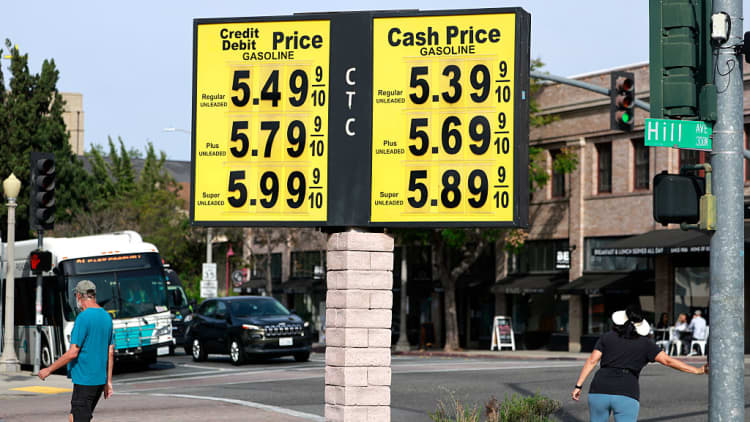
Global energy prices are rising as traffic through the Strait of Hormuz remains more than 90% below where it was before the Iran war broke out Feb. 28. While the U.S. remains insulated to a certain extent, domestic prices are also moving higher — especially in California.
The national average for a gallon of regular gas stood at $4.13 on Monday, according to AAA, but in California it’s $5.89. The price for a gallon of diesel in the state hit a record $7.75 on April 9.
California typically has among the highest gas prices in the U.S., in part because of the state’s stricter fuel requirements. But its pipeline connection to the oil and fuel-rich Gulf Coast is also limited, meaning it has to look abroad for supplies. Almost 75% of the state’s crude oil is imported, with imports also shoring up gasoline and jet fuel supplies. A portion of those products come from South Korea and India, both of which are currently grappling with tight inventories due to the loss of Middle East oil. In March, South Korea implemented fuel export caps.
“We are worried about supply on the West Coast,” Andy Walz, Chevron’s president for downstream, midstream and chemicals, told CNBC on March 25 at CERAWeek by S&P Global. “Asia has been among the first to feel the pain of lost Mideast Gulf crude supply, and California is leveraged into Asia. They’ll feel the pain initially in prices because China, Korea or India won’t send it to California unless they are compensated to ship it,” he said.
“And then the second phase of that crunch is they won’t have the products that they want or need. Reliable security of energy supply is important in California for national and economic security,” Walz added.
Watch the video above to hear more about California’s energy struggle.