

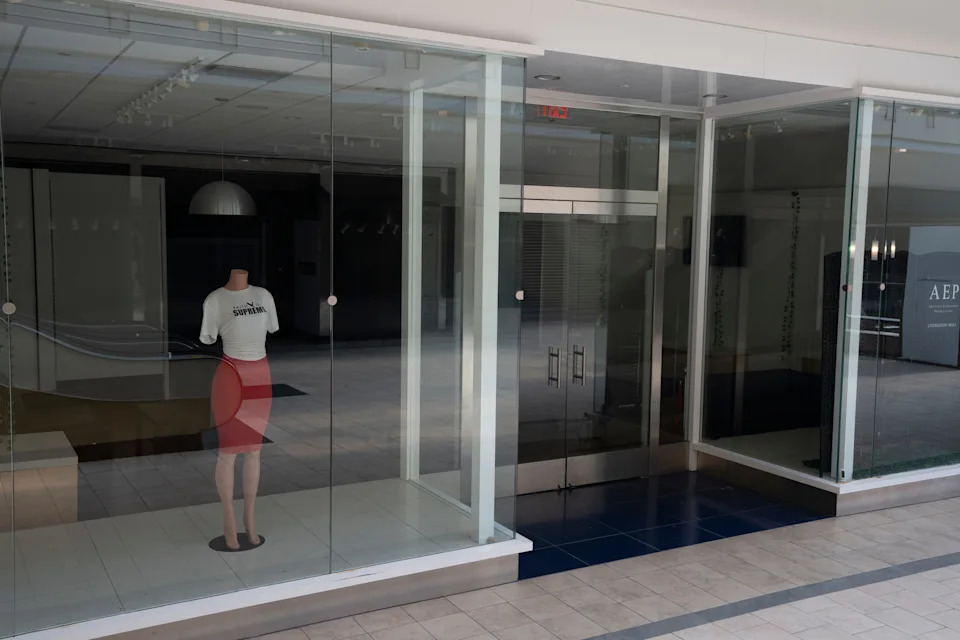
Google the phrase “dead malls in New Jersey” and you’ll be hit with a few contenders — but a standout in North Jersey is Livingston Mall.
With the Macy’s anchor store closing sometime in 2026, and Barnes & Noble expected to leave sometime in 2027, Livingston Mall is on its last breaths.
It opened on Eisenhower Parkway in western Essex County in 1972 as downtowns and urban centers became hollowed out and the dominant spenders moved to the suburbs.
Advertisement
Advertisement
Malls are not necessarily dead — data from ICSC, a worldwide commercial real estate trade association, showed that during this past holiday season, 72% of shoppers bought something at a suburban shopping center or mall.
But analysts interviewed by NorthJersey.com all agreed that Livingston Mall is a “dead mall.”
In its heyday, the two-story center had three major department stores and 108 small specialty stores, historical documents show. They included Lord & Taylor, Sears, KB Toys, Victoria’s Secret and Bath & Body Works.
Livingston — with Route 280 running through it — “was readily accessible to both Newark and New York by a major transportation artery,” Charles DeMarco Jr., a local historian, has written. The completion of Eisenhower Parkway between Route 10 and Roseland only bolstered customer traffic.
Advertisement
Advertisement
With cities and suburban downtowns struggling at the time, and online shopping still decades away, suburban malls were the dominant centers of culture and commerce.
“People would spend their Saturday afternoons and Sunday afternoons strolling the mall, looking at new goods, figuring out what’s fashionable and the like,” said James Hughes, a professor of urban planning and policy development at Rutgers University in New Brunswick.
Everything went wrong. Including a pandemic
But everything that could go wrong for a mall managed to hit Livingston Mall.
Big-box stores such as Target and Walmart rose, siphoning away dollars.
And Livingston Mall faced intense competition from just 4 miles away in The Mall at Short Hills, a luxury shopping center that had opened in its enclosed format in 1980.
Advertisement
Advertisement
Then online shopping rolled out in force around 2007 and 2008, Hughes said.
Feb 4, 2026; Livingston, NJ, USA; Livingston Mall is mostly empty of tenants.
Urban centers like Newark and Jersey City, as well as downtowns like Ridgewood and Westfield, rebounded in the past decade and drew back dollars that had gone to malls, Hughes said.
By themselves, any one of those factors could have caused malls to struggle, other than the top-tier ones in New Jersey like Garden State Plaza and American Dream.
But then the COVID-19 pandemic decimated customer traffic.
Luis Castillo, a general manager at the mall’s Popeyes restaurant, started working at Livingston Mall in 2017. Cinnabon shuttered within the next couple of years, but its closure hardly seemed ominous to the other tenants.
Advertisement
Advertisement
The shopping center remained bustling until the COVID pandemic hit the area and a state-mandated lockdown forced store owners to close up shop temporarily, Castillo said. At least they thought it would be temporary.
‘Never thought it would go down so fast’
When the mall reopened, many of the business owners couldn’t afford to return. They had spent what little money they had left to cover back rent through the six-month closure at the landlord’s insistence, Castillo said.
One store after another shuttered.
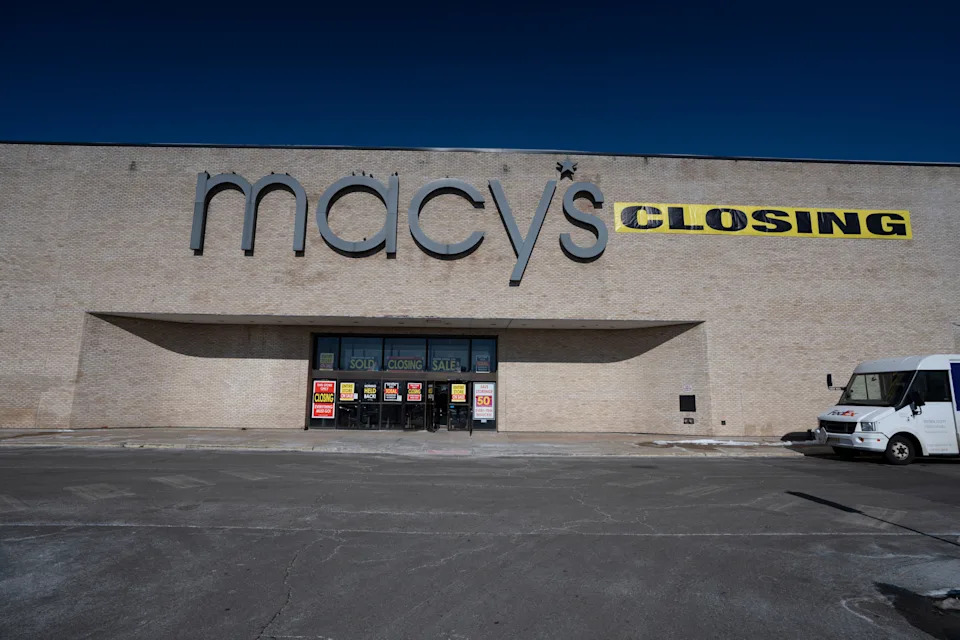
Feb 4, 2026; Livingston, NJ, USA; The Livingston Mall is mostly empty of tenants.
“We never thought it would go down so fast,” Castillo said. It didn’t take long for much of the central corridor to become vacant. The only available light came through the mall’s atrium. The place was dark, literally and figuratively.
Advertisement
Advertisement
“Sort of the perfect storm hit,” Hughes said of Livingston Mall.
Sears closed in April 2020 and Lord & Taylor in August that year. Developers of the nearby Livingston Shopping Center announced this January that the Barnes & Noble store would be moving out of Livingston Mall property and going less than 2 miles down the road to the shopping center.
Most recently, Macy’s announced in early January that it would close its location at Livingston Mall later in the year.
Simon Property Group ‘no longer committed’
Livingston Mall had been owned by Simon Property Group, one of the largest mall owners in the U.S. In November 2025 it acquired the remaining stake of Taubman Realty Group, which operates luxury malls across the U.S., including The Mall at Short Hills. That acquisition process by Simon Property Group started in 2020.
Advertisement
Advertisement
“From that point forward, it was clear that Simon was no longer committed to the success of the Livingston Mall, and the neglect of the property was immediate,” Livingston Township Manager Barry Lewis told NorthJersey.com in an email.
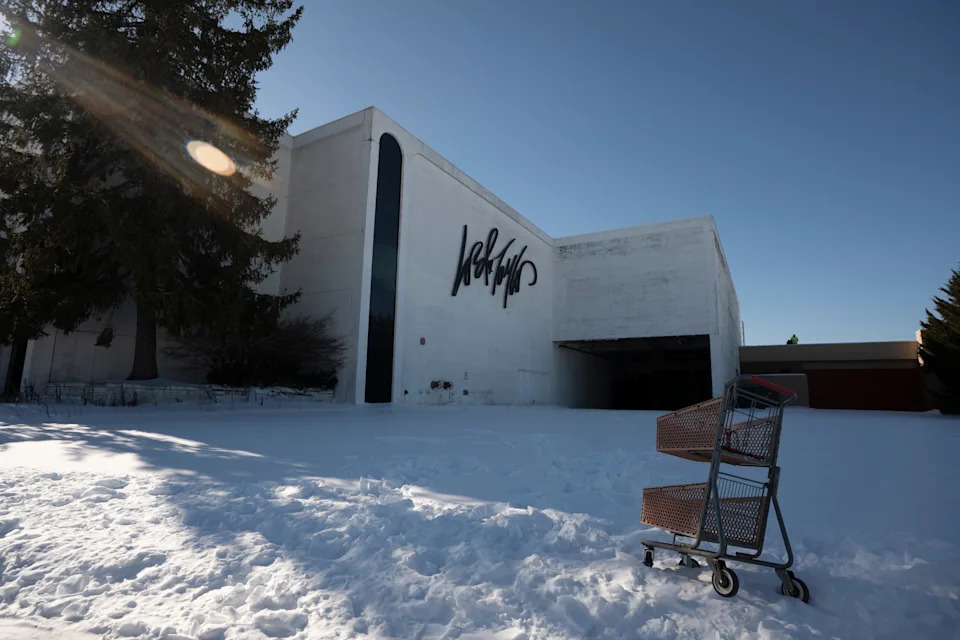
Feb 4, 2026; Livingston, NJ, USA; The Livingston Mall is mostly empty of tenants.
Kohan Retail Investment Group — which bought the mall in 2022 — “has a very poor track record in owning and managing malls, even being referred to in one article as a ‘mall scavenger,’” Lewis continued.
“As soon as Kohan bought the property, the decline accelerated and the conditions at the Livingston Mall quickly deteriorated and have continued to do so,” Lewis said.
Representatives for Kohan did not return multiple emails seeking comment or requesting an interview.
What lies ahead for Livingston Mall?
Livingston Mall’s days as an enclosed shopping center are over, argued Charles Cristella, who studies retail and malls for Jones Lang LaSalle, a commercial real estate adviser.
Advertisement
Advertisement
“You cannot bring it back as a traditional mall,” he said in an interview.
Last year, the township designated Livingston Mall as an “area in need of redevelopment” and drew up potential plans for what could go at the site.
“The town — if it’s a redevelopment area — is in the driver’s seat,” said Hughes, of Rutgers. “They could acquire the land and totally control it.”
Lewis said the township could potentially acquire the land through eminent domain.
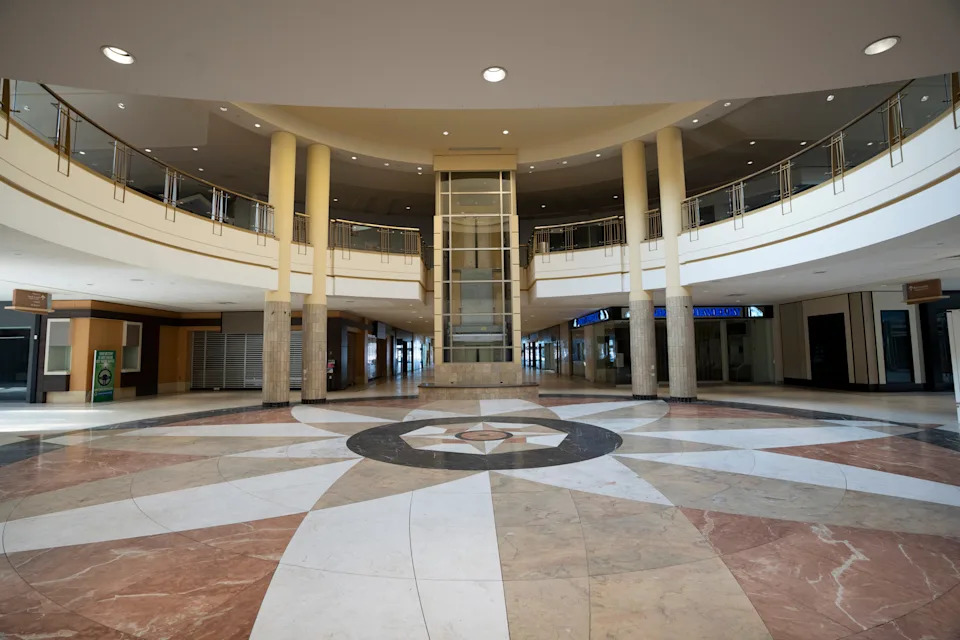
Feb 4, 2026; Livingston, NJ, USA; The Livingston Mall is mostly empty of tenants.
There are several competing interests at the moment, Lewis said. Kohan owns 30 acres of land, and Macy’s is looking to buy 10 acres. Hudson Bay Company — the owner of Lord & Taylor — has a 99-year lease on 10 acres. Transformco, which acquired some former Sears assets, owns 16 acres.
Advertisement
Advertisement
“If private developers are unable to successfully negotiate and acquire control of the mall on reasonable terms, the township is prepared to exercise its power of eminent domain to acquire the property in partnership with one or more redevelopers,” Lewis said.
What would go there remains up in the air. The township of Livingston has an affordable housing obligation of 376 housing units through apartments and townhouses, and the mall site has been eyed as a candidate for where the housing could be built.
There’s also the possibility of a “broad mix of uses that may include retail, dining and entertainment, experiential, recreation, public amenities, hotel, medical or other office and other possible uses,” Lewis said.
For comparison, a redevelopment project adjacent to Garden State Plaza in Paramus is underway and will include as many as 1,400 apartments, along with additional shops, a hotel, a senior care facility and a park-like “town green.”
Advertisement
Advertisement
“There is no other property almost anywhere of this size in such a prime location that holds such promise,” Livingston Mayor Shawn Klein said in an email.
What’s the mall like on its deathbed?
On a snowy Wednesday in early February, Livingston Mall loomed over an empty, decaying parking lot pocked with potholes. Some of the lot was blanketed in unplowed, pristine snow left over from a storm that passed over the region over a week earlier.
The mall’s decay is apparent to the few employees who still work there.
Jim Testa, an optician at LensCrafters, knows a secret trick for navigating the blacktop’s treacherous terrain: “To get out of here you just kind of hug the building until you pass Macy’s. Then you steer outward. But there’s one more crater after that.”
Over the past year, JCP&L — the local electric company — cut power to the building twice during business hours because the landlord hadn’t paid the mall’s utility bills, Testa said.
The food court sinks were long out of service. In the summer, there was no air conditioning.
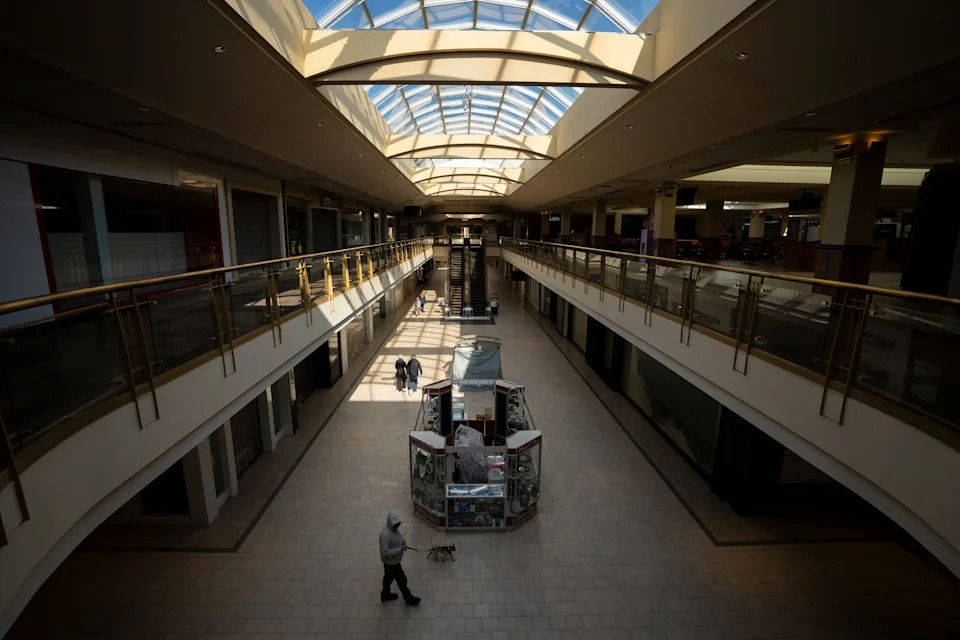
Feb 4, 2026; Livingston, NJ, USA; The Livingston Mall is mostly empty of tenants.
When rain dripped down through the ceiling, the owners of Hidden Treasures, a collectibles and antiques store, called the fire department. No one at the investment group has answered the phone in three years, said David McMorrow of Hidden Treasures.
Testa calls the municipality when emergent circumstances arise. The Popeyes staff has learned to fix issues themselves.
Now, amid the arctic blasts bringing in bitter cold from the north for days on end, LensCrafters employees said they have used their own space heater to keep the office habitable.
“It’s uncomfortable,” said Castillo, the general manager at Popeyes. “All my employees wear coats.”
His assessment was blunt: “There is no management.”
(This story was updated because an earlier version included an inaccuracy.)
Daniel Munoz covers business, consumer affairs, labor and the economy for NorthJersey.com and The Record.
Email: munozd@northjersey.com; Twitter:@danielmunoz100, Facebook and Instagram
This article originally appeared on NorthJersey.com: Zombie mall is dying in North Jersey, hit by ‘perfect storm’