

All of our meals and snacks affect our health on a short-term basis. When eaten regularly, they also impact our bodies (for better or worse) down the line. However, one gastroenterologist has a special love of breakfast, especially when it comes to his patients’ gut health and his own.
“Think of your breakfast as the opening act for your gut’s entire day,” shares Dr. Rosario Ligresti, MD, the chief ofthe division of gastroenterology at Hackensack University Medical Center. “What you eat first thing in the morning sets the stage for your digestive system’s rhythm and your gut microbiome’s activity.”
Dr. Ligresti says well-balanced breakfasts stabilize blood sugar levels, prevent energy crashes and lower the odds that you’ll get a hankering for less nutritious, sugary snacks later. Speaking of later, we’re not fans of potty talk at the breakfast table. That said, good breakfast habits can lead to good bathroom habits, so you’re less likely to get constipated.
“Essentially, a good breakfast habit tells your gut, ‘We’re starting the day strong and nourished,’ which can lead to better energy, focus and overall digestive wellness throughout the day,” he explains.
What qualifies as a good breakfast, though? To help, Dr. Ligresti shares the one breakfast mistake he wishes people would stop making and delicious ways to break the habit.
🩺SIGN UP for Parade’s health newsletter with expert-approved tips, healthy eats, exercises, news & more to help you stay healthy & feel your best self💊
The One Breakfast Mistake To Stop Making, Says a GI Doc
HUIZENG HU/Getty Images (HUIZENG HU/Getty Images)
Dr. Ligresti wishes people would stop skipping or deprioritizing fiber and protein in the morning. “Protein and fiber are the power couple of a gut-healthy breakfast, and I can’t recommend them enough,” he tells Parade.
Advertisement
Advertisement
Indeed, fiber is getting billed as the new protein these days. However, trend forecasters can take a seat because there’s plenty of room for both fiber and protein at the breakfast table. Unfortunately, many sugary cereals and other traditional breakfast foods are low in both of these nutrients, and that’s a problem.
Let’s start with fiber. It’s not a standalone macro nutrient like protein is, though complex carbohydrates like whole-wheat breads and pastas contain fiber. Regardless, fiber can have a macro effect on your overall health, especially your digestive tract. Fewer than 10% of Americans get enough fiber daily, though, and it’s not doing their guts any good.
“When you consume fiber, it acts like a broom for your digestive tract, adding bulk to your stool, which helps with regularity and prevents constipation,” Dr. Ligresti explains. “Furthermore, certain fibers are prebiotics, meaning they are food for the beneficial bacteria in your gut, helping to create a diverse and thriving gut microbiome.”
Whether the spotlight on protein is on dimming remains to be seen. However, he hopes that people continue to prioritize the macronutrient every morning. “Protein, on the other hand, is crucial for making you feel full and satisfied, which helps to curb overeating later in the day.”
Advertisement
Advertisement
In short? Protein and fiber are not rivals. They are two of your gut’s best friends.
“Having these two nutrients together at breakfast provides you with sustained energy, supports muscle health, and keeps your blood sugar stable for hours,” Dr. Ligresti says.
Speaking of hours, they’re at the heart of why many people don’t get enough fiber and protein at breakfast. There simply aren’t enough of them in the day. “In our fast-paced lives, time is often the biggest reason people skip a nutrient-dense breakfast,” he states. “It’s much quicker to grab a pastry, a sugary cereal, or just a cup of coffee on the way out the door.”
As convenient and tasty as these options are, Dr. Ligresti explains they are low in protein and fiber and high in refined sugars and unhealthy fats. “In the short term, these foods can cause a rapid spike and subsequent crash in your blood sugar, leading to fatigue and more cravings,” he reports. “They can also contribute to uncomfortable symptoms like bloating and gas.”
Advertisement
Advertisement
Over time, he says eating these foods at breakfast or any time of day consistently might alter your gut microbiome, potentially leading to inflammation and a greater risk of developing other chronic health issues.
Related: This Is Hands-Down the Best Drink for Gut Health, According to Gastroenterologists
High-Fiber, High-Protein Breakfasts for Gut Health
Ready to help your gut health rise with a breakfast that consistently shines? Dr. Ligresti shares three time-saving breakfasts rich in fiber and protein.
-
Greek yogurt with berries and nuts. This easy-to-assemble breakfast idea is a win for your schedule and gut health. “The Greek yogurt provides a fantastic source of protein, the berries are loaded with fiber and antioxidants, and the nuts add more fiber and healthy fats for sustained energy,” he says.
-
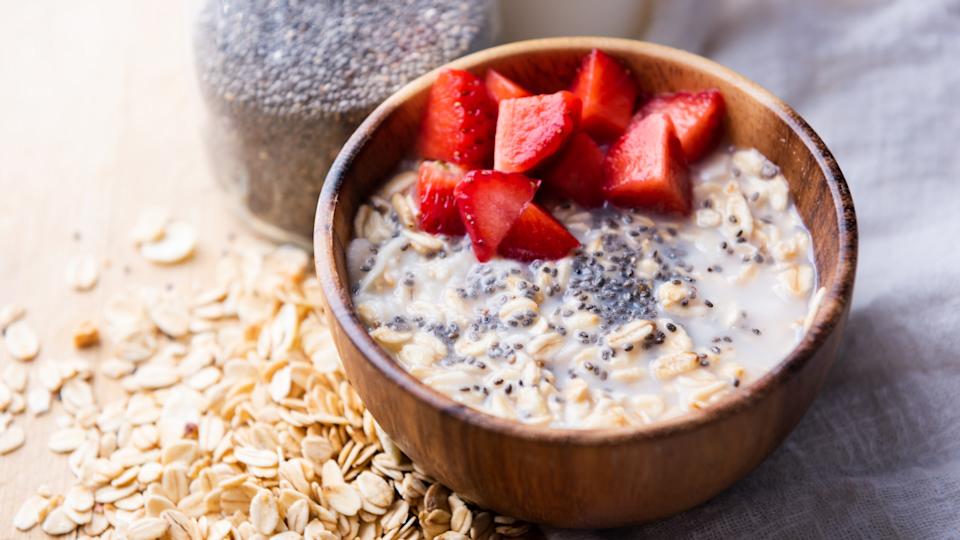
Oatmeal with chia seeds and an apple. You definitely don’t have to ditch all of the classics, especially not oatmeal. “Oatmeal…is rich in soluble fiber, which is great for heart health and keeping you full,” he says. “I like to stir in some chia seeds for an extra boost of fiber and omega-3s, and top it with sliced apples for some sweetness and crunch.”
-
Scrambled eggs with spinach on whole-wheat toast. Savory tooths, rejoice. “The eggs are a complete protein, and adding spinach provides extra vitamins and fiber,” Dr. Ligresti shares. “Serving it on a slice of whole-wheat toast ensures you’re getting that essential fiber to start your day right.”
Related: The One Breakfast Habit Brain Health Experts Are Begging You To Stop
3 More Ways To Keep Your Gut Healthy
Getting enough protein and fiber is a great first step toward better gut health. However, Dr. Ligresti shares that there are other important strategies to implement to keep your gut happy. He recommends:
1. Drink water
Dr. Ligresti always tells patients to sip water throughout the day to help prevent constipation and support their overall gut health. “Water is essential for helping fiber do its job of moving things smoothly through your digestive system,” he says.
2. Eat more fermented foods
“Fermented foods like yogurt, kefir, kimchi and sauerkraut are rich in probiotics, which are live beneficial bacteria that can help support a healthy gut microbiome,” he explains. If you don’t normally consume these foods, he suggests starting with a small serving of one of these ideas each day.
3. Manage stress
He points out that there’s a strong brain-gut connection, and chronically high stress can throw things out of whack. “High levels of stress can negatively impact your digestion,” Dr. Ligresti says. “I encourage my patients to find a daily stress-reducing activity they enjoy, whether it’s a short walk, meditation or simply reading a book.”
Up Next:
Related: ‘I’m a Gastroenterologist—This Is the One Snack I Wish Everyone Would Avoid’
Sources:
-
Dr. Rosario Ligresti, MD, the chief ofthe division of gastroenterology at Hackensack University Medical Center
-
Closing America’s Fiber Intake Gap. American Journal of Lifestyle Medicine.
-
The Role of Prebiotics in Modulating Gut Microbiota: Implications for Human Health. International Journal of Molecular Sciences.
Advertisement
Advertisement
This story was originally published by Parade on Feb 1, 2026, where it first appeared in the Health & Wellness section. Add Parade as a Preferred Source by clicking here.