

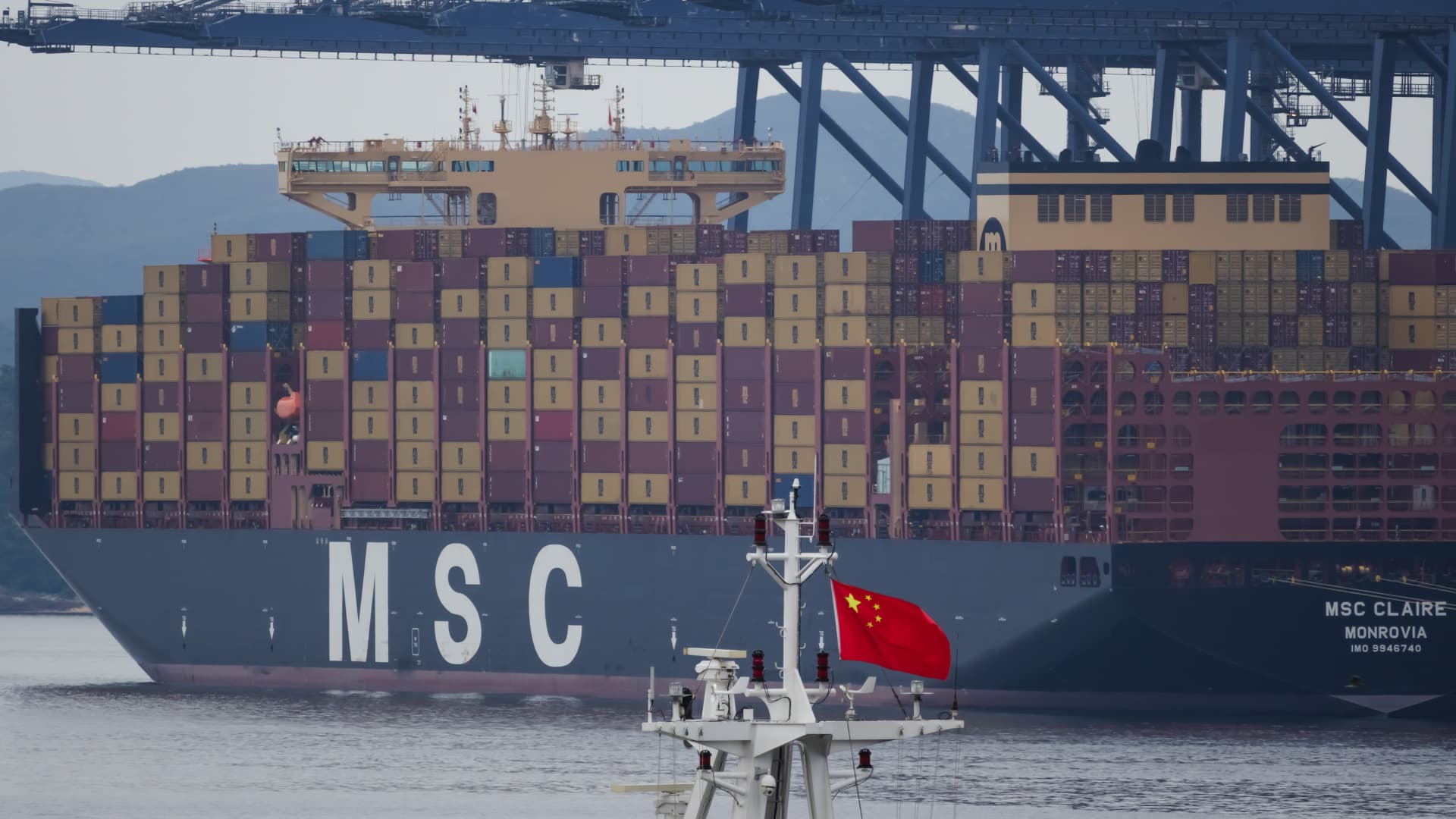
- “China kind of saved the day,” and helped the world avoid the “doomsday scenario” as the Strait of Hormuz closure choked off 20% of global energy supply, according to S&P Global Ratings.
- Beijing slashed its imports after the war broke out and tapped into its stockpiles, keeping a lid on global oil prices and safeguarding its economy.
- But signs are emerging that China’s crude imports may be gradually rebounding, posing a test for global oil markets and the economy.
China’s years of stockpiling of crude and subsequent pullback on oil purchases since the Middle East war erupted in late February helped the world avoid a far deeper energy crisis. But that buffer may face a test as Beijing shows signs of resuming purchases, according to economists.
“China kind of saved the day,” and helped the world avoid the “doomsday scenario” when the Strait of Hormuz closure choked off 20% of global energy supply, Paul Gruenwald, global chief economist at S&P Global Ratings, said at a conference in Singapore on Thursday.
The world’s largest oil buyer has slashed its imports after the war broke out, tapping into its stockpiles, keeping a lid on global oil prices and safeguarding its economy.
The U.S. Energy Information Administration estimates China holds 1.4 billion barrels of strategic crude oil inventories, compared with 825 million barrels in the U.S., as of December 2025, including commercial inventories. Its crude imports dropped below 8 million barrels a day in May and June, falling for the first time since 2016, according to the EIA.
Soon after the conflict broke out, oil analysts had forecast prices surging to $150 to $200 a barrel on the back of the abrupt supply disruption. “Not only did we get the magnitude wrong, sometimes we got the direction wrong,” Gruenwald said.
Brent crude prices had eased to around $80 a barrel before shooting up again in recent days and crossing $100 a barrel on Wednesday amid renewed hostilities between Iran and the U.S. in the Gulf. But that handle is still “digestible” for the global economy, he said.
That buffer though isn’t without limits, as signs are emerging that China’s crude imports may be gradually recovering.
China’s crude imports rebounded 22% and 6.2% month on month in July and August, respectively, though still significantly below last year’s level, according to official trade data.
Should China resume importing at its pre-war pace, the drag on global growth from elevated oil prices would deepen well beyond current estimates, said Krishna Srinivasan, director for the Asia and Pacific Department at the International Monetary Fund.
Beijing’s model
Beijing had positioned itself for exactly this scenario, building redundancy that let oil consumption fall without denting economic activity, said Kai Guo, executive president and senior fellow of China-focused think-tank CF40 Institute.
The crisis has vindicated years of government investment in stockpiling and clean energy ahead of a potential rupture in global oil supply chains, he said.
China holds roughly four months of crude in national reserves, and a new energy law enacted last year requires major oil companies to hold additional reserves on top of normal commercial inventories, Dan Wang, China director at Eurasia Group, said Thursday. “The economy is basically cushioned from this oil crisis,” she said.
Coal, which still supplies about 53% of China’s energy mix by Wang’s estimate, acted as a crucial shock absorber, allowing the economy to substitute away from oil when prices spiked.
“This particular China model” wouldn’t work well in a normal economy given the waste of investment it implies, but “when something uncertain like this happens, especially in Eurasia, it works,” Wang said.
She expects the Gulf standoff to last at least a year, with oil holding between $85 and $100 a barrel through 2027.
Goldman Sachs economist Daan Struyven warned in a recent note that prices could still reach $120 a barrel as the war, now in its seventh month, continues to disrupt shipping.