

-
Fresh Middle East tensions have sent oil prices spiking again.
-
Brent oil is inching back toward $100 a barrel, hovering around six-week highs.
-
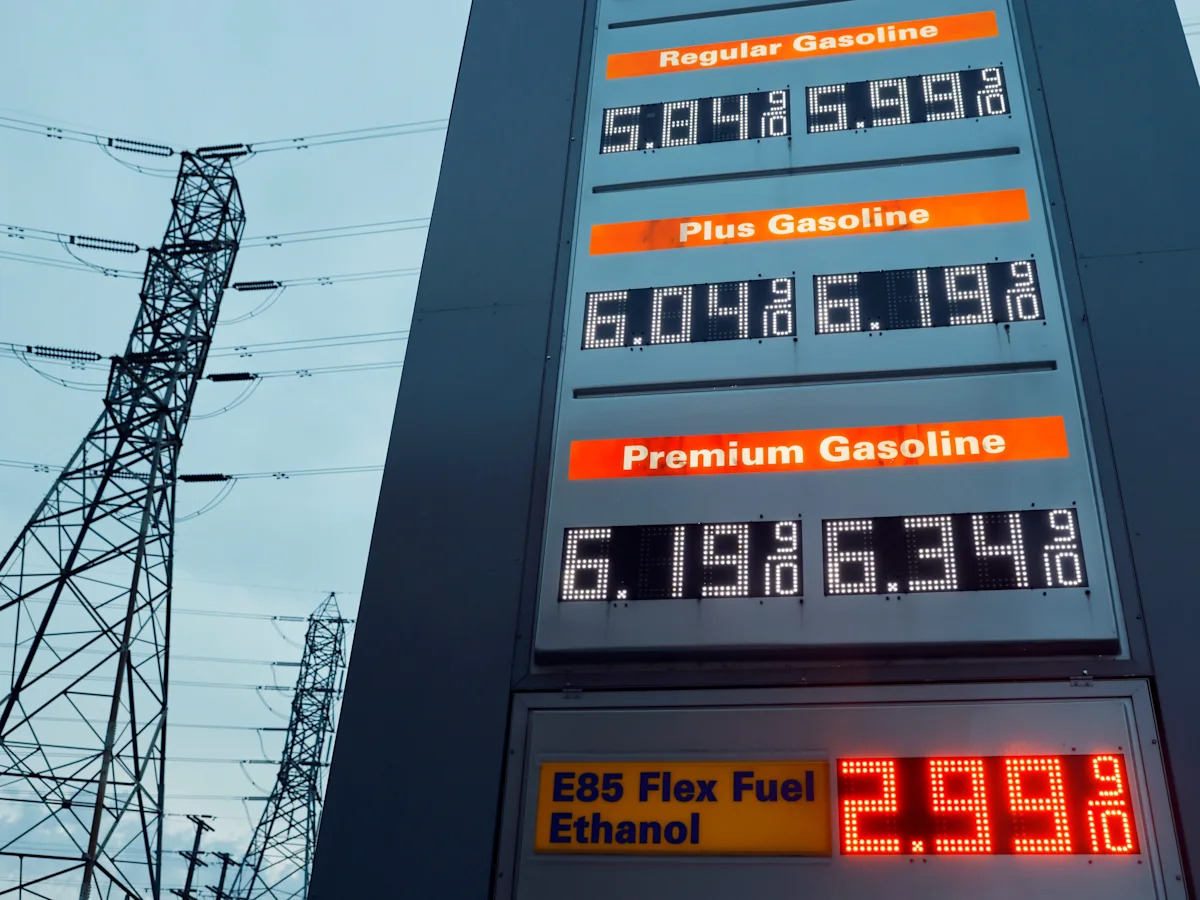
As oil rises, gas prices in the US hit a Labor Day record.
Markets are worried about oil again.
Oil prices have jumped, sparking a sharp surge in US gas prices that culminated in record high prices at the pump for the Labor Day weekend. Markets are digesting a series of fresh strikes in the Middle East that have further diminished hopes that the US and Iran will resolve the six-month-old war soon. Stocks dropped to start the holiday-shortened week, with the Dow falling 600 points by mid-morning on Tuesday.
The US struck three Iranian oil tankers on Saturday. The attack was in retaliation for Iran’s attacks on two US warships last week.
On Tuesday, Saudi Arabia’s energy ministry said several of its energy facilities were attacked by the Iran-aligned Houthis over the weekend.
Brent crude, the international benchmark, rose to $98 a barrel Tuesday morning, edging closer to the critical $100-a-barrel mark, a key threshold watched closely by investors. West Texas Intermediate crude also rose 1%, trading around $93 a barrel.
Gas prices surged as a result of the latest oil spike. The average price for a gallon of gas rose to $4.15 on Monday, the first time a gallon of regular unleaded gas has ever surpassed $4 on Labor Day, according to AAA.
A prolonged conflict in the Middle East is once again on the radar as summer winds down, with investors fretting over the damage that higher oil prices could inflict on the US economy. The latest oil price surge is also coming at a critical juncture for the Federal Reserve, which is assessing the path for its future rate decisions as inflation remains elevated.
Markets are pricing in a 58% chance the Fed will hike at its September policy meeting, though the decision will hinge on next Friday’s August inflation report.
Here’s what smart people are saying about the oil and gas situation:
Goldman Sachs: Oil could break $120 a barrel in upside scenario
Commodity researchers at Goldman Sachs updated their oil price forecasts for the year, lifting their predictions for the price of Brent crude to $85 a barrel by December.
In Goldman’s upside scenario, Brent prices could exceed an $120 a barrel in 2027, assuming that average oil output from the Gulf remains lower than expected.
“Intensified Hormuz and Red Sea shipping attacks are the most likely trigger of price upside,” the bank wrote in a client note.
Goldman’s bear case scenario has crude falling back to $60 a barrel in 2027, assuming that oil output from the Gulf is much higher than expected.
Bank of America: Oil prices risk $150 a barrel
Bank of America’s upside scenario has oil prices rising back to near their Great Financial Crisis peak.
Strategists at the bank said they were eyeing further disruptions that could push crude to around $120 a barrel, though they believe oil could reach $150 a barrel if the war produced “vast energy infra damage” in the Middle East. BofA’s base case is for Brent to average around $83 a barrel in the second half of the year.
“Our central view assumes Hormuz flows gradually normalize and a prolonged conflict is avoided. Yet, the market remains exposed to significant risks,” the bank said in a client note on Monday.
Jeff Currie: “Energy crisis” will be evident in crude products
The longtime commodities analyst and Goldman Sachs alum said the lack of refining capacity and dwindling oil reserves around the world meant energy markets were in a “critical situation with “no easy fix.”
Though investors are preoccupied with the price of crude oil, inflationary pressures will largely stem from the higher refined oil product prices, Currie said in a post on X Tuesday morning, pointing to crude products like gas, diesel, and jet fuel.
“That will hit the headline CPI index very soon,” Currie wrote. “The energy crisis is here: it has arrived, and it’s showing in the product prices, not in crude,” he added.
Robin Brooks: Crude prices are unlikely to rise back to wartime peaks
The top economist and chief FX strategist at Goldman Sachs said he believed oil prices were unlikely to push back to their peak of around $120 a barrel. In a post on Substack, he laid out three reasons why:
-
Markets no longer believe apocalyptic forecasts. “The fact that all the apocalyptic forecasts from earlier this year were so badly wrong has made markets suspicious of any “oil prices will go up” narratives. They basically see them as snake oil at this point,” Brooks said.
-
Markets are watching the economic toll on Iran. There appears to be “growing appreciation” for how the US blockade is hurting Iran’s economy, which could push the nation to come back to the negotiating table, Brooks said. Iran is on track to see its worst economic contraction in over 30 years, according to estimates from the IMF.
-
Markets “learn to live with shocks and trade around them,” Brooks said. He pointed to how South Korea recently pivoted to Canadian oil amid the latest supply shock, and said he expected the trend to continue with “growing intensity” around the world.
“We’re not going to see my peak $125 estimate (reflecting the 80 percent rise) again. Those days are over,” Brooks wrote.
Renaissance Macro: Disinflation progress will be “undone” in a few months
Gas prices are rising at a time of year when they typically decline, researchers at Renaissance Macro wrote in a post on X on Tuesday. That means the latest surge in energy prices could have a large impact on coming inflation reports.
Average retail gas prices are around $0.95 higher than they were a year ago, RenMac said.
“Whatever seasonal tailwind we saw to consumer price inflation in June and July from lower gasoline prices will be undone,” the firm wrote.
James Thorne: Hiking interest rates could be a major policy mistake
If central bankers were to raise interest rates during the energy supply shock, that would mark one of the “Most Damaging” policy mistakes since the Great Financial Crisis, James Thorne, the chief market strategist at Wellington-Altus, wrote in a post on X Tuesday morning.
“The question is whether the Warsh Fed will repeat that failure: answer an energy supply shock with tighter money, squeeze households and businesses even harder, and destroy demand to prove it is serious about inflation,” he wrote.
Bespoke Investment: Inflation fears could soon hit markets
Inflation fears stemming from higher energy prices could soon impact markets, though investors are shrugging off the latest price increases for now, Paul Hickey, the co-founder of Bespoke Investment Group, wrote in a note.
“Energy prices can’t keep rising without impacting the market, and at some point even a tame inflation report later this week may not mean much if crude oil prices remain in the mid-90s, approaching triple digits,” Hickey said.
US stocks traded relatively flat on Tuesday morning, remaining near records despite the jump in oil and gas prices. Treasury yields, which reflect interest rate expectations in the economy, remained mostly level.
If you enjoyed this story, be sure to follow Business Insider on Yahoo.