
Stocks fell on Tuesday, the first day of September, as inflation worries and elevated oil prices lifted bond yields in the U.S. and abroad, raising concern about whether the Federal Reserve will tighten monetary policy later this month.
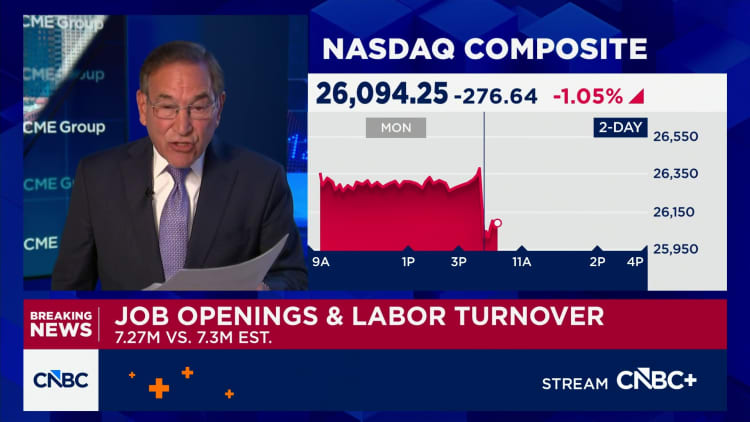
The Dow Jones Industrial Average shed 412 points, or 0.8%. The S&P 500 shed 0.7%, while the Nasdaq Composite pulled back 0.9%.
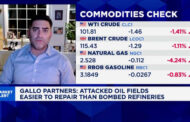
Oil prices rose after U.S. Central Command said that American forces were attacking Islamic Revolutionary Guard Corps targets in Iran. U.S. oil prices gained 4% to trade above $89 per barrel. Brent futures also gained 4% to trade above $93.
This adds to oil’s advance at the start of the week following a resumption of military action between the U.S. and Iran. On Monday, a tanker passing through the Strait of Hormuz was hit by three unknown projectiles. Additionally, President Donald Trump threatened to respond to Iran’s latest attacks on U.S. military bases in the region, telling Fox News Monday that “we are going to hit them hard.”
Global bond yields also continued their march higher Tuesday. The U.S. 10-year Treasury note yield scaled to levels not seen since January 2025. Japan’s 10-year yield reached its highest level since August 1996, while Germany’s benchmark yield rose to a 2011 high.
Yields around the world have been rising recently as traders worry that persistently higher oil prices may drive inflation and influence the Fed’s interest rate path. The central bank is slated to meet next in two weeks. On top of that, September has been a historically bad month for stocks.
“Always and forever, the stock market is going to struggle to digest big and kind of volatile moves in the bond market,” said Ross Mayfield, Baird investment strategist. “I think this is with us for the near term and the long term.”
Even with the worries around inflation, Mayfield said there just haven’t yet been enough changes in the economic data that would support an interest rate hike in September. Last week, core PCE figures for July came in line with expectations.
“I know the market is anticipating a hike right now, or at least placing better odds on a hike than hold. I still think they hold in September, but probably have to hike at least once by the end of the year,” he said while cautioning that “a lot can change” still before the meeting, especially with the August nonfarm payrolls report due Friday.
Home construction ETF tumbles after weak spending numbers

— Davis Giangiulio and Gina Francolla
Energy ETFs hit fresh highs
A number of exchange-traded funds linked to the energy sector scored new highs on Tuesday.
This comes as energy stocks such as Phillips 66, Marathon Petroleum and Valero Energy hit fresh 52-week highs Tuesday.
— Gina Francolla and Sean Conlon
ISM manufacturing misses forecast; job openings in line
Readings on U.S. factory activity and labor market activity came in close to expectations Tuesday, indicating mostly stable conditions:
The ISM Manufacturing Index was at 54.6 for August, down 1 point from July and slightly below the Dow Jones consensus for 55.3. The prices index was unchanged at 71.1 while employment edged down 1.6 points to 51.2. Readings above 50 indicate expansion.
On the labor market, job openings in July nudged higher to 7.27 million, up 89,000 and about in line with the 7.3 million forecast. Hiring dropped by 278,000, taking the rate down 0.2 percentage point to 3.2%, its lowest since February. Quits and layoffs both edged lower, according to the Job Openings and Labor Turnover Survey from the Bureau of Labor Statistics.
— Jeff Cox
Stocks open lower
The three leading U.S. indexes began Tuesday’s session in negative territory.
The Dow Jones Industrial Average dropped 363 points, or 0.7%, just after the opening bell. The S&P 500 also fell 0.7%, while the Nasdaq Composite declined 1.3%.
— Sean Conlon
Capital Markets expect strong fourth-quarter
Capital Markets expect the third-quarter volatility in the U.S. economy could be followed by a strong fourth-quarter performance.
“For the second half of the year, we continue to think increased volatility during Q3 is likely, with a better outlook in Q4 if inflation can moderate, perhaps helping Fed sentiment around the time investors might be gaining more comfort with a new Chair,” the analysts wrote.
AI has driven the market narrative, the analysts said, adding a seven-part framework for AI. The report noted return of interest on AI is still hard to grasp but China’s efforts with its “low-end but highly efficient models will exacerbate ROI frustrations in the West.”
“AI’s dominance of the stock market is here to stay for a while,” they concluded.
— Ananya Chetia
Piper Sandler upgrades Akamai on belief that compute will accelerate
Akamai Technologies will need to step up capital spending to meet the demand for its compute, but those expenditures will be worth it for the long-term growth it delivers for the company, according to Piper Sandler.
The firm upgraded the stock to overweight from neutral, though it lowered its price target to $125. That implies a 15% gain from Monday’s close. Analyst James Fish wrote in a Monday note that compute appears to be set for an acceleration.
“Compute is about to show a material inflection / acceleration, and segment estimates finally look reset enough,” Fish said. “The +$2.8B commitments give some degree of visibility, and the pipeline is robust. Akamai could add another ~100 MWs,” megawatts, “of capacity than we currently model.”
Fish added conservative top-line estimates for the company, the growing need for application security and higher contract renewal prices could be other catalysts for Akamai’s stock. Shares were higher by just under 1% in premarket trading Tuesday.
— Davis Giangiulio
Top news ahead of the Wall Street open
— Jenni Reid
Global bond yields surge
Bond yields surged across major markets as renewed Middle East hostilities reignited inflation concerns.
The key U.S. 10-year Treasury note yield moved to a 20-month high, rising 3 basis points to 4.7880%.
Japan’s benchmark 10-year yield jumped more than 6 basis points, moving to 3% for the first time since 1996. Japan’s short-term 2-year government bond yield also touched a 31-year high of 1.81%.
Elsewhere, yields on U.K. 10-year government bonds, known as Gilts, rose 10 basis points to 5.2501%, their highest level since June 2008 in the midst of the Global Financial Crisis. The U.K. 30-year Gilt yield, meanwhile, also soared 10 basis points to 5.8909%, its highest level since March 1998.
German government bonds — typically seen as a barometer for euro zone borrowing costs — also moved higher.
— Hugh Leask
Euro zone inflation rises to 3.3%, boosting bets on ECB rate hike
Inflation in the euro area rose to 3.3% in August from 2.9% in July, the European Union’s statistics office Eurostat said Tuesday.
Higher energy costs were a major driver of the increase, with inflation accelerating to 14.3% from 10.3%.
The release cemented market expectations for the European Central Bank to raise interest rates in September, with a 25 basis point move higher to 2.5% almost fully priced in, according to LSEG data.
— Jenni Reid
Novartis shares rise 5% as MS drug trial win outshines cell therapy setback
Shares of Novartis rose as much as 5% on Tuesday after a positive clinical trial readout for its multiple sclerosis drug, despite reports that the drugmaker has paused another experimental treatment after three patients died.
The Swiss pharmaceutical company said its drug candidate remibrutinib succeeded in two late-stage trials by “significantly” reducing relapse rates in patients with MS compared with another established treatment, but analysts said more details were needed.
While the headline results were encouraging and Novartis said estimated peak sales for remibrutinib surpass $3 billion, Citi analysts said the key comparison will be with peer Roche’s drug fenebrutinib in a more detailed data presentation slated for October.
For investors, the positive readout outweighed a setback in its pursuit to treat patients with autoimmune disease with cell therapy. The company confirmed earlier media reports that it had temporarily stopped enrolling and treating patients with the drug rapcabtagene autoleucel, or rap-cel, after learning of three fatal cases of severe immune response.
The cell therapy is a so-called CAR-T treatment that has Novartis and pharma peers excited about the prospect of modifying a patient’s own immune cells to help find and destroy harmful cells in the body.
— Elsa Ohlen
Yen weakens past closely-watched 160 per dollar level
European stocks open slightly lower
European stock markets were mixed at Tuesday’s open, though the benchmark Stoxx 600 index was 0.07% lower.
Chemicals stocks popped 1.3% while travel retreated 1.3%.
— Jenni Reid
South Korean exports surge, powered by over 200% rise in AI-related shipments
Semiconductor exports from South Korea climbed 209% year-on-year in August, marking an all-time record as demand for AI infrastructure remained strong.
The strong performance in the sector helped boost the country’s exports to a better-than-expected performance, with total shipments climbing 68.7% year on year to $98.25 billion.
Economists polled by Reuters had expected a 62.6% increase.
The demand for semiconductors was due to increased capital expenditures by hyperscalers such as Google and Amazon, South Korea’s ministry of trade, industry, and resources said.
— Lim Hui Jie
CNBC Daily Open: A surprise seat for Russia at the G20 table
The surprise appearance of Russia’s Siluanov at the G20 meeting sent shockwaves through the European community.
It marked his first in-person attendance of the summit since Russia’s invasion of Ukraine in 2022 and seemed to blindside the European attendees. Officials opposed appearing in the traditional G20 family photo with Russia, which was ultimately taken without Siluanov present.
U.S. Treasury Secretary Scott Bessent met with Siluanov on the sidelines of the event, and reportedly told the Russian official that no sanctions relief or new agreements with Moscow were possible, as long as the war in Ukraine continues.
Treasury yields rise as Japan’s 10-year breaches 3% for first time in decades
Government borrowing costs rose around the world as investors eyed renewed hostilities in the Middle East and the potential for higher interest rates in major economies.
The yield on the U.S. 10-year Treasury note was nearly 3 basis points higher at 1:30 a.m. ET on Tuesday at 4.784%, the highest level since early 2025.
Federal Reserve Chair Kevin Warsh’s Friday speech at the Jackson Hole symposium was widely interpreted as hawkish by the market, leading to increased bets on a September rate hike.
The Japanese 10-year yield was last up 6 basis points, rising above 3% for the first time since 1996 before retreating marginally.
That comes after U.S. Treasury Secretary Scott Bessent met with Japan’s Finance Minister Katayama Satsuki and Bank of Japan Governor Ueda Kazuo and reportedly stressed the need for rate hikes.
“I have information that the market doesn’t have, and it’s my belief that the Japanese government and the BOJ will do the things that will lead to a stronger yen,” Bessent told CNBC on Monday.
— Jenni Reid
Oil climbs as U.S.-Iran attacks reignite supply concerns
Oil prices rose Tuesday after renewed fighting between the U.S. and Iran revived concerns about supply disruptions.
Brent crude futures climbed 1.14% to $91.52 a barrel. U.S. West Texas Intermediate crude gained 1.46% to $87.01.
U.S. President Donald Trump on Monday threatened additional strikes on Iran after the two countries exchanged direct attacks Sunday for the first time in a month, escalating a conflict that had recently evolved into an economic stand-off.
Additionally, a tanker was struck by three unknown projectiles while transiting the Strait of Hormuz on Monday, stoking worries that the Middle East conflict could once again escalate.
The tanker was sailing in the southern shipping lane close to the Omani coast, the UK Maritime Trade Operations agency said in a post on Tuesday, Asia time. No casualties were reported.
— Lee Ying Shan
Fast-fashion giant Shein’s shares drop 9% in Hong Kong market debut
Shares of fast-fashion giant Shein fell 9% as they began trading in Hong Kong on Tuesday.
The Singapore-headquartered, company sold about 280 million shares in its initial public offering, raising around 13.60 billion Hong Kong dollars ($1.74 billion) after the final offer price was set at HK$48.56 per share, below the maximum offer price of HK$49.5.
The IPO values Shein at around $26.5 billion, compared with its private market valuation of $100 billion in 2022.
Shein’s Hong Kong debut comes after earlier attempts to go public in New York and London did not materialize. The China-founded company, which moved its headquarters to Singapore in 2022, first filed confidentially for a U.S. IPO in 2023 before turning to London, where Beijing withheld approval over risk disclosures tied to its China supply chain, effectively blocking the listing.
— Jenny Lee
Japan’s 10-year government bond yield hits a 3-decade high of 3%
Japan’s 10-year government bond yield hit 3% for the first time in three decades, as investors demand a higher premium for holding debt amid fiscal worries, a weak yen and rate hike prospects.
The country’s 10-year bond yield was last up 6 basis point at 3.001%, after U.S. Treasury Secretary Scott Bessent reportedly said that Bank of Japan Governor Kazuo Ueda would “do the right thing” to prop up the yen.
“As I’ve said, I have information that the market doesn’t have,” Bessent told CNBC’s Sara Eisen on “Squawk on the Street.” “And it’s my belief that the Japanese government and that the BOJ will do the things that will lead to a stronger yen,” he added.
The news comes ahead of the Bank of Japan’s policy decision on Sept. 18.
— Justina Lee
China’s manufacturing activity expands at faster-than-expected pace in August: private survey
China’s manufacturing activity expanded at a faster pace than expected in August, according to a private survey by credit research firm RatingDog.
The country’s manufacturing purchasing managers index rose to 51.5, beating Reuters’ poll expectations of 51, and better than the 49.8 official PMI reading on Monday.
A PMI reading above 50 indicates expansion, while one below 50 indicates contraction.
RatingDog in its release said that this was due to output, new orders and exports all expanding at faster rates.
Exports grew at their quickest rate in six months, and new orders placed with Chinese manufacturers rose for a 15th consecutive month in August, marking the longest period of growth since 2018, RatingDog said.
— Lim Hui Jie
Mainland China and Hong Kong indexes fall amid broader decline in Asia markets
Mainland China and Hong Kong shares were lower, tracking broad losses among other Asian markets.
Hong Kong’s Hang Seng index was down 0.46%, while mainland China’s CSI 300 slipped 0.19%.
Investors’ focus will be on fast-fashion giant Shein, whose shares fell 7% as they began trading in Hong Kong on Tuesday.
— Justina Lee
South Korea’s Kospi drops over 1% as Asia-Pacific markets open lower
Asia-Pacific markets traded lower Tuesday, as worries over renewed Middle-East armed conflict dent investor sentiment.
Japan’s Nikkei 225 fell 0.91%, while the Topix was flat.
The Kospi as well as the small-cap Kosdaq fell more than 1% in early trading.
Australia’s benchmark S&P/ASX 200 was 0.36% lower.
— Justina Lee
Asia-Pacific markets set to open lower amid higher oil prices, heightened Mideast tensions
Asia-Pacific markets were set to open lower Tuesday, weighed by higher oil prices amid heightened tensions in the Middle East.
Japan’s Nikkei 225 was poised to decline, with the Chicago futures contract at 65,850 and its Osaka counterpart last trading at 65,820, compared with the index’s previous close of 66,311.93.
Hong Kong Hang Seng index futures were at 25,346, compared with the index’s last close of 25,566.99.
Futures for Australia’s S&P/ASX 200 last traded at 9,002, while the index closed at 9,076.
President Donald Trump reportedly threatened to conduct further strikes against Iran, after Iran launched missiles overnight at two U.S. air bases in Jordan in response to a U.S. attack on Iran’s Larak Island.
That said, Trump and his senior aides were also considering waging limited strikes in the Strait of Hormuz to prevent Iran from attacking ships, Axios reported, citing three U.S. officials.
— Justina Lee
Stocks need ‘weak’ jobs data, says Interactive Brokers
“Wall Street needs weak statistics to unlock interest-rate relief here, which has been the top risk over the past several weeks. Softer labor figures would justify a balanced approach at the Warsh Fed, leading the committee to take the employment side of the institution’s dual mandate into consideration, effectively loosening financial conditions. Additionally, a second month in a row of declining payrolls would motivate heavy bond buying as slowdown angst gets priced more seriously onto the curve,” said Jose Torres, senior economist at Interactive Brokers.
— Fred Imbert