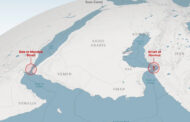

- Oil shipments through the Strait of Hormuz have risen to around 4.8 million barrels per day since the U.S.-Iran deal, according to Kpler.
- Oil flows in June are the highest since the U.S. and Israel attacked Iran on Feb. 28 but remain well below prewar levels when 15 million bpd exited the strait, Kpler said.
- The jump comes as the threat level for ships crossing Hormuz has been downgraded to “moderate.”
At least 20 oil tankers carrying 35 million barrels have exited the Persian Gulf through the Strait of Hormuz since the U.S. and Iran agreed to open the sea lane, according to data provided by Kpler, a firm that tracks global trade flows.
The tankers, which were not Iranian in origin, had been stuck in the Gulf for more than three months after Tehran effectively closed Hormuz early in the war, Kpler analysts said in a Tuesday note. The ships should reach their final destinations, which are mostly in Asia, by early August, the analysts said.
In total, confirmed oil shipments through Hormuz have risen to around 4.8 million barrels per day since the U.S.-Iran deal, according to Kpler. Oil flows in June are the highest since the U.S. and Israel attacked Iran on Feb. 28. But exports remain well below prewar levels when 15 million bpd exited the strait.
Iranian oil tankers carrying about 21 million barrels have exited Hormuz in June, the Kpler analysts said.The U.S. Navy lifted its blockade of Iran on June 18 and the Treasury Department this week waived sanctions on the country’s oil sales through August.
Tankers loaded since late April have exited Hormuz with 51 million barrels this month, the Kpler analysts said. These ships are not of Iranian origin and had their transponders turned off, the analysts said. The actual figure is likely even higher, they said.
The jump in oil exports comes as the Joint Maritime Information Center has downgraded the threat level for ships crossing Hormuz to “moderate.” The center is a U.S.-led maritime security organization headquartered in Bahrain that coordinates among allied navies and commercial ships in the Middle East.
“An attack is possible but not likely, and overall risk has decreased following the implementation of the U.S.–Iran Memorandum of Understanding,” the JMIC said in its latest advisory published Tuesday. It had classified the security situation as “critical,” its highest threat assessment, as recently as June 4.
The International Maritime Organization, a United Nations agency, said Tuesday that it will implement an evacuation plan for the more than 11,000 seafarers still stuck in the Persian Gulf. The plan is backed by Iran, Oman, the U.S. and the other Gulf states, the IMO said.
“We have secured the necessary safety guarantees and have thoroughly verified the conditions for safe navigation to support these operations,” IMO Secretary-General Arsenio Dominguez said in a statement.