

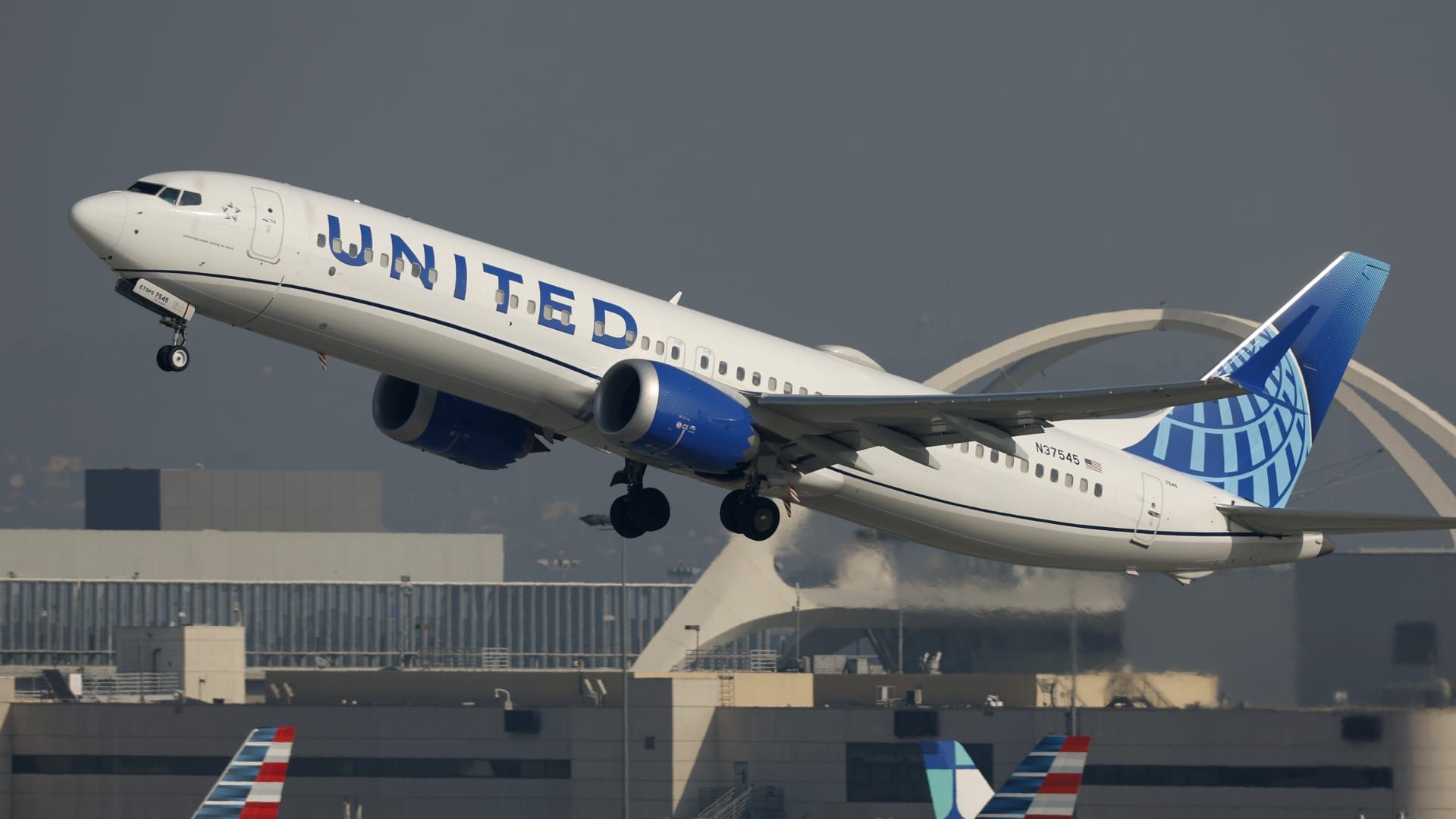
United Airlines has gone from one of the more vulnerable names during the oil shock to an attractive cyclical recovery setup in the airline industry. The stock has reclaimed its 200-day moving average and relative strength is improving as investors rotate back toward airlines with pricing power and premium demand exposure. That shift matters because the Q1 results already showed that the core business remains resilient, even in the face of elevated fuel costs. United reported a strong first quarter but more importantly, premium revenue increased 14%, loyalty revenue rose 13%, and business revenue was up 14%, showing that United’s “United Next” strategy is translating into stronger revenue quality rather than simply more capacity. The market has already punished the stock for the fuel-driven guidance reset, but the recent breakout suggests investors may be looking through that headwind. If oil stabilizes and United continues recovering fuel cost pressure through pricing, capacity discipline and premium mix, the stock’s deep valuation discount could begin to close. Trade timing & outlook UAL recently crossed above its 200-day moving average near $101, with both the 1-month and 6-month trends turning bullish. Trend reversal: The move above the $100 resistance level confirms a shift from repair to accumulation. Support reclaimed: The $100–$105 zone now becomes the key support area for the bullish setup towards our $120 target. Relative strength improving: UAL’s recent rally reflects renewed institutional demand after several months of pressure from fuel costs and macro concerns. Fundamentals United trades at a substantial discount despite improving growth and margin metrics. The valuation gap is the key opportunity. United is trading at less than half the industry multiple while still screening above the group on expected EPS growth, expected revenue growth, and margins. That suggests the market is still pricing in a large fuel and macro discount, even as the stock’s technicals improve. Bullish thesis Higher-quality revenue: Premium revenue, loyalty revenue, and business revenue all grew double digits in Q1, showing that United is increasingly winning higher-value customers rather than simply chasing volume. That mix shift gives the company better pricing power through fuel volatility. Fuel headwinds are managed: United absorbed a $340 million year-over-year increase in fuel expense in Q1 yet still delivered a profit and expanded reported pre-tax margin. Management has already adjusted capacity for the rest of 2026 to account for higher fuel prices, reducing planned capacity by five points and targeting flat to modest growth in the second half. Valuation provides room for re-rating: At roughly 11x forward earnings, United trades at a deep discount to transportation peers despite above-industry growth expectations. If oil prices stabilize and the market gains confidence in the 2026 earnings range, that discount could narrow quickly. Options trade To express a bullish view with defined risk, consider Selling the July 17, 2026 $105 / $92.50 Put Vertical @ $4.58 Credit. This entails: Sell the July 17, 2026 $105 Put Buy the July 17, 2026 $92.50 Put Maximum Reward: $458 per contract if UAL is above $105 at expiration Maximum Risk: $792 per contract if UAL is below $92.50 at expiration Breakeven: $100.42 This structure benefits if UAL holds the recently reclaimed support zone while allowing investors to collect premium after the stock’s trend reversal. View this trade on OptionsPlay for updated pricing . Summary United Airlines has moved from macro casualty to recovery candidate. The stock has reclaimed its 200-day moving average, Q1 results showed resilient premium and business demand, and management is actively responding to elevated fuel costs through capacity discipline and revenue initiatives. While airlines remain cyclical and fuel-sensitive, United’s improving technicals, discounted valuation, and premium revenue momentum create an attractive bullish setup for investors willing to underwrite the remaining macro volatility. DISCLOSURES: None. All opinions expressed by the CNBC Pro contributors are solely their opinions and do not reflect the opinions of CNBC, or its parent company or affiliates, and may have been previously disseminated by them on television, radio, internet or another medium. THE ABOVE CONTENT IS SUBJECT TO OUR TERMS AND CONDITIONS AND PRIVACY POLICY . THIS CONTENT IS PROVIDED FOR INFORMATIONAL PURPOSES ONLY AND DOES NOT CONSTITUTE FINANCIAL, INVESTMENT, TAX OR LEGAL ADVICE OR A RECOMMENDATION TO BUY ANY SECURITY OR OTHER FINANCIAL ASSET. THE CONTENT IS GENERAL IN NATURE AND DOES NOT REFLECT ANY INDIVIDUAL’S UNIQUE PERSONAL CIRCUMSTANCES. THE ABOVE CONTENT MIGHT NOT BE SUITABLE FOR YOUR PARTICULAR CIRCUMSTANCES. BEFORE MAKING ANY FINANCIAL DECISIONS, YOU SHOULD STRONGLY CONSIDER SEEKING ADVICE FROM YOUR OWN FINANCIAL OR INVESTMENT ADVISOR. Click here for the full disclaimer.
This airline stock could be a big winner as oil prices stabilize. How to trade it

About the author