

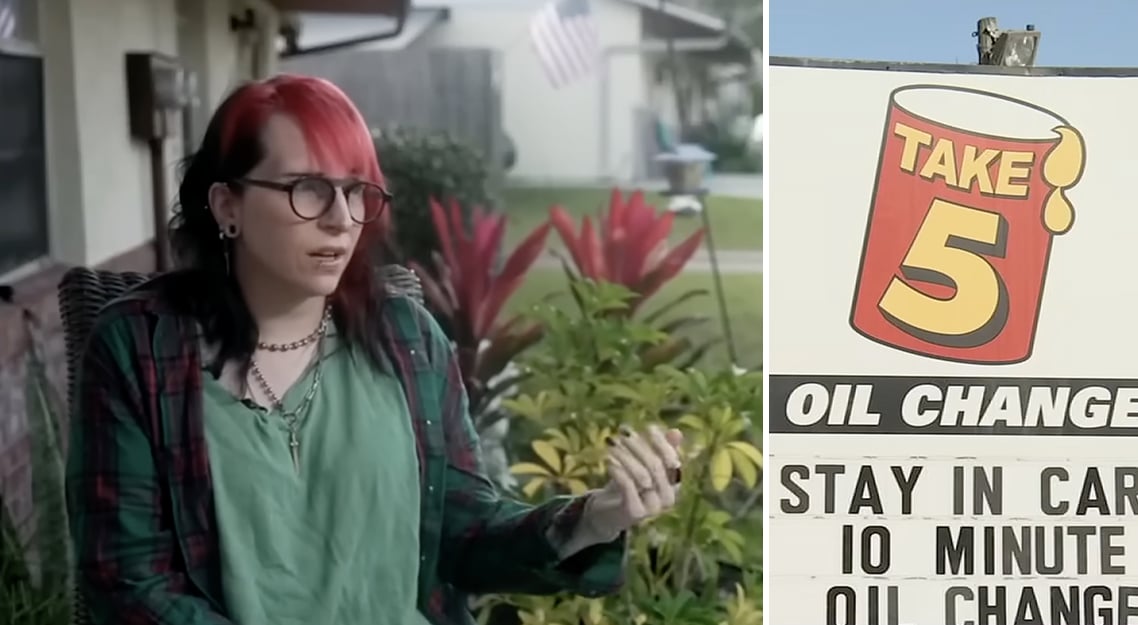
Shannon Gerdauskas thought she was going in for a routine oil change. Instead, the DeLand, Florida resident was left with a repair bill of nearly $20,000.
Gerdauskas took her Mercedes to a Take 5 Oil Change location in October, expecting to be in and out quickly. Instead, she says a technician mistakenly drained her transmission fluid rather than her engine oil and let her drive away.
The trouble started within minutes.
“It was shifting by itself. So, it was like trying to go into reverse and neutral as I’m driving down the road,” she told WFTV’s Action 9 Consumer Investigator (1).
Gerdauskas immediately took the car back to the shop, where workers acknowledged the error.
But what followed was a familiar and often pricey consumer dispute: Who’s responsible when routine maintenance goes wrong?
According to Gerdauskas, her dealership later determined the vehicle had been driven with no transmission fluid, which can cause serious internal damage to the car. The estimated cost to replace the transmission and complete all the related work totaled more than $18,000.
Take 5 told Action 9 that it paid for a transmission flush but closed the claim after the dealership said the transmission did not need to be replaced.
Meanwhile, Gerdauskas said she was told the transmission would eventually fail.
“My transmission was not damaged before it entered their shop,” she said, “Just pay for the damage you did.”
In a statement, the company said that while cases like Gerdauskas’ are rare, they “strive to resolve matters fairly and transparently”. But her case isn’t as unique as it seems.
Action 9 found similar complaints nationwide involving Take 5.
WFTV’s sister station in Charlotte, North Carolina, spoke with Ben Brown in 2025 after a visit to Take 5. He said he pulled over, opened the oil reservoir and smoke was coming out. His car ultimately needed a new engine.
Read More: The average net worth of Americans is a surprising $620,654. But it almost means nothing. Here’s the number that counts (and how to make it skyrocket)
In Georgia, Robin Porterfield reported a similar experience. She said technicians drained her oil but never refilled it before sending her on her way.
In Jacksonville, Florida, a city report listed 45 complaints involving “substandard” work done on police vehicles (1).
Car service disputes often come down to documentation. Shops may argue that the damage was pre-existing or unrelated to the work they did. Without clear evidence of a vehicle’s condition beforehand, consumers could face an uphill battle.
Some state attorneys general, including New York’s, also advise drivers that proving negligence requires documentation, not just sudden symptoms (2).
And it’s not just oil changes. Any routine service carries similar risks and exposure.
So what can consumers do?
Gerdauska’s story reinforces how important it is to protect yourself; before, during and after a service. Here’s what consumer experts like the Federal Trade Commission and AAA recommend (3, 4).
Before service
-
Make sure the repair shop carries liability insurance
-
Ask how claims are handled if something goes wrong
-
Take photos or a short video of your dashboard, mileage and any warning lights
-
Keep recent service records showing the vehicle’s condition
-
Ask clear questions about exactly what will be serviced and how
During service
-
Request for a written work order listing all tasks to be performed
-
Avoid authorizing additional work verbally and get written approval before changes are made to the estimate
-
Look out for pressure to approve repairs quickly
After service
-
Watch for any changes in performance
-
Stop driving immediately if something feels wrong and return to the shop
-
Get any admissions or explanations in writing
If there’s a dispute
-
Keep all documents, receipts and communications
-
Contact your state consumer protection agency
-
Consider an independent inspection
Gerdauskas ultimately avoided paying out of pocket, but only after extensive documentation helped prove her case.
For other drivers, the lesson is clear: Take time to prepare before heading to your next checkup or appointment, get everything in writing and don’t be afraid to ask questions.
Join 200,000+ readers and get Moneywise’s best stories and exclusive interviews first — clear insights curated and delivered weekly. Subscribe now.
We rely only on vetted sources and credible third-party reporting. For details, see our editorial ethics and guidelines.
WFTV 9 (1); New York Attorney General (2); Federal Trade Commission (3); AAA (4).
This article provides information only and should not be construed as advice. It is provided without warranty of any kind.