

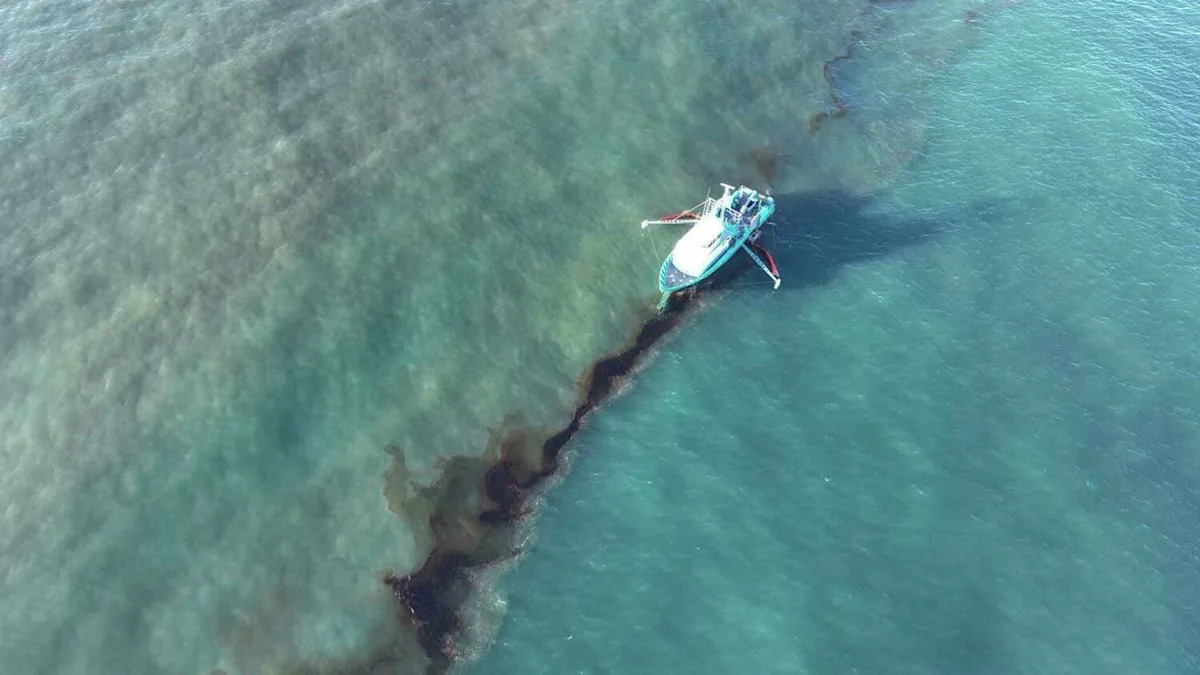
A Houston company faces a record $9.6 million in federal fines for its role in a major oil spill that mystified experts and environmentalists for months following the November 2023 incident.
The release of 1.1 million gallons of crude oil into the Gulf of Mexico was believed to be among the 10 largest to affect American waters in 40 years of tracking, according to the environmental group Healthy Gulf. But years passed without information about what caused the spill.
Advertisement
Advertisement
The U.S. Department of Transportation, which regulates pipelines, offered clarity Monday. It said in a statement that Houston-based Panther Operating Co. faces the “largest civil penalty ever” for alleged failures leading up to and during the incident involving its pipeline offshore Louisiana, Main Pass Oil Gathering.
THE INCIDENT: A million gallons of oil spilled into the Gulf in November. We still don’t know where it came from.
The National Transportation Safety Board concluded in a June report that the Houston pipeline operator failed to act promptly during the incident and also failed to assess the impact of a series of major hurricanes on the pipeline. Hurricanes move sand and mud along the sea floor, rattling attached pipelines in ways that can cause damage, it said.
“Information widely available within the industry suggested that land movement related to hurricane activity was a threat to pipelines in the Gulf of America,” the NTSB wrote in its report, using the Trump administration’s name for the body of water historically known as the Gulf of Mexico.
Advertisement
Advertisement
Panther’s “inappropriate” response in a control room as the incident unfolded made matters worse, the NTSB found. A controller and a supervisor doubted the data they were seeing – data that showed pressure changes and an oil flow mismatch – and decided not to shut down the pipeline. The pipeline stayed active until the following morning, allowing more crude to flow into open waters.
“Had the controller shut down the pipeline when he first identified a flow mismatch, or when he first reported the issue to his management, far less crude oil would have been released,” the NTSB wrote.
Panther could not immediately be reached for comment. Panther operates the pipeline on behalf of Houston-based Third Coast Infrastructure, the NTSB said.
Advertisement
Advertisement
The DOT said it was trying to send “a clear signal” to offshore operators that they are responsible for maintaining their equipment despite destructive hurricanes.
“Safety drives everything we do,” U.S. Transportation Secretary Sean P. Duffy said. “We are sending a clear signal: when companies fail to abide by the rules, we won’t hesitate to act decisively. We’ll continue to enforce the law to ensure the safety and efficiency of our energy infrastructure.”
This message grows more relevant as more companies head offshore. The Trump administration recently opened whole swaths of coastline to offshore production while paring back environmental assessments historically included in the permitting process.
Third Coast told the NTSB it would outfit the pipeline system offshore Louisiana with a leak detection software and alarm. The pipeline company based in Houston also said it would update its control center procedures and training.
This article originally published at A massive Gulf of Mexico oil spill mystified experts. Years later, a Houston oil company faces record fines.