

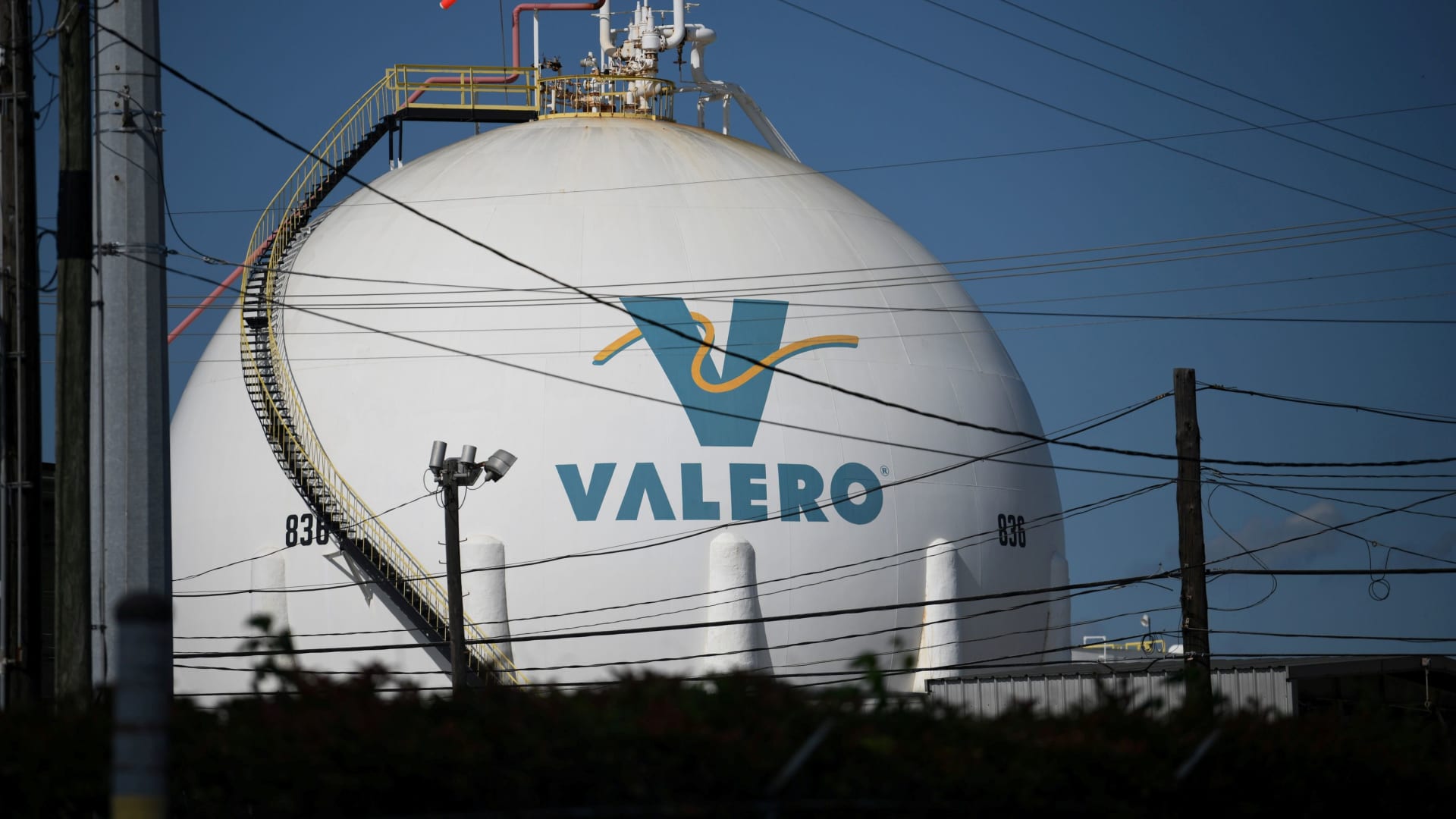
Energy stocks climbed Monday as investors bet that a potential rebuilding of Venezuela’s oil sector could reshape crude flows and benefit refiners built to handle the country’s dense heavy crude oil. President Donald Trump has called on U.S. oil companies to invest in Venezuela after the overthrow of President Nicolas Maduro. Venezuela, a founding member of OPEC, sits on the largest proven crude oil reserves in the world. The country’s oil is among the heaviest and most sulfur-laden in the world, and only a limited number of refineries are equipped to process it efficiently. One potential big winner is Valero Energy , according to multiple analysts on Wall Street. UBS said Valero is best positioned among U.S. refiners should Venezuelan supply increase, given its Gulf Coast footprint and ability to process heavy sour barrels at scale. “U.S. refiners with high complexity refineries are very well positioned to buy these cheaper barrels and use their advanced kits to deliver petroleum products with very high clean yields (gasoline, diesel, and Jet fuel),” UBS said in a note to clients. VLO 1D mountain Valero, one day Still, Venezuela has shut roughly one million barrels a day of domestic refining capacity, and UBS expects much of that capacity to be difficult to restart after years of underinvestment and operational decay. Raymond James struck a similar note, arguing that a bullish production outlook would be a clear win for U.S. refiners even if it ultimately limits oil-price upside later this year and into 2027. Much of the Gulf Coast system is configured for heavy sour crude, the firm said, naming Valero as the largest beneficiary by capacity, followed by Marathon Petroleum and Phillips 66 . Data from Mizuho underscore how concentrated the exposure already is. U.S. Gulf Coast refiners — the PADD3 region — account for more than 85% of Venezuela crude imports into the U.S., and margins could benefit from more reliable availability. The U.S. imported about 135,000 barrels a day from Venezuela in October 2025, roughly 15% of the country’s total output. Valero Energy, Chevron and PBF Energy were the largest importers that month, accounting for roughly 37%, 24% and 28% of U.S. Venezuelan crude imports, respectively. “We see the near-term impact of a U.S. ‘takeover’ of Venezuela as positive for refining margins (CVX, VLO, PBF most exposed), but potentially negative for oil prices longer term,” Mizuho said in a note. Analysts at JPMorgan Chase said the situation in Venezuela is not currently escalating and that details around future oil operations remain scarce. The consensus trade, they said, has been to fade any short-term rally in crude prices while selectively buying refiners exposed to heavy sour crude flows.
Energy stocks rise on Venezuela rebuilding potential. Why one refining stock could be the big winner


About the author