
American oil companies have long hoped to recover the assets that Venezuela’s authoritarian regime ripped from them decades ago.
Now the Trump administration is offering to help them achieve that aim — with one major condition.
Administration officials have told oil executives in recent weeks that if they want compensation for their rigs, pipelines and other seized property, then they must be prepared to go back into Venezuela now and invest heavily in reviving its shattered petroleum industry, two people familiar with the administration’s outreach told POLITICO on Saturday. The outlook for Venezuela’s shattered oil infrastructure is one of the major questions following the U.S. military action that captured leader Nicolás Maduro.
But people in the industry said the administration’s message has left them still leery about the difficulty of rebuilding decayed oil fields in a country where it’s not even clear who will lead the country for the foreseeable future.
“They’re saying, ‘you gotta go in if you want to play and get reimbursed,’” said one industry official familiar with the conversations.
The offer has been on the table for the last 10 days, the person said. “But the infrastructure currently there is so dilapidated that no one at these companies can adequately assess what is needed to make it operable.”
President Donald Trump suggested in a televised address Saturday morning that he fully expects U.S. oil companies to pour big money into Venezuela.
“We’re going to have our very large United States oil companies, the biggest anywhere in the world, go in, spend billions of dollars, fix the badly broken infrastructure, the oil infrastructure and start making money for the country,” Trump said as he celebrated Maduro’s capture.
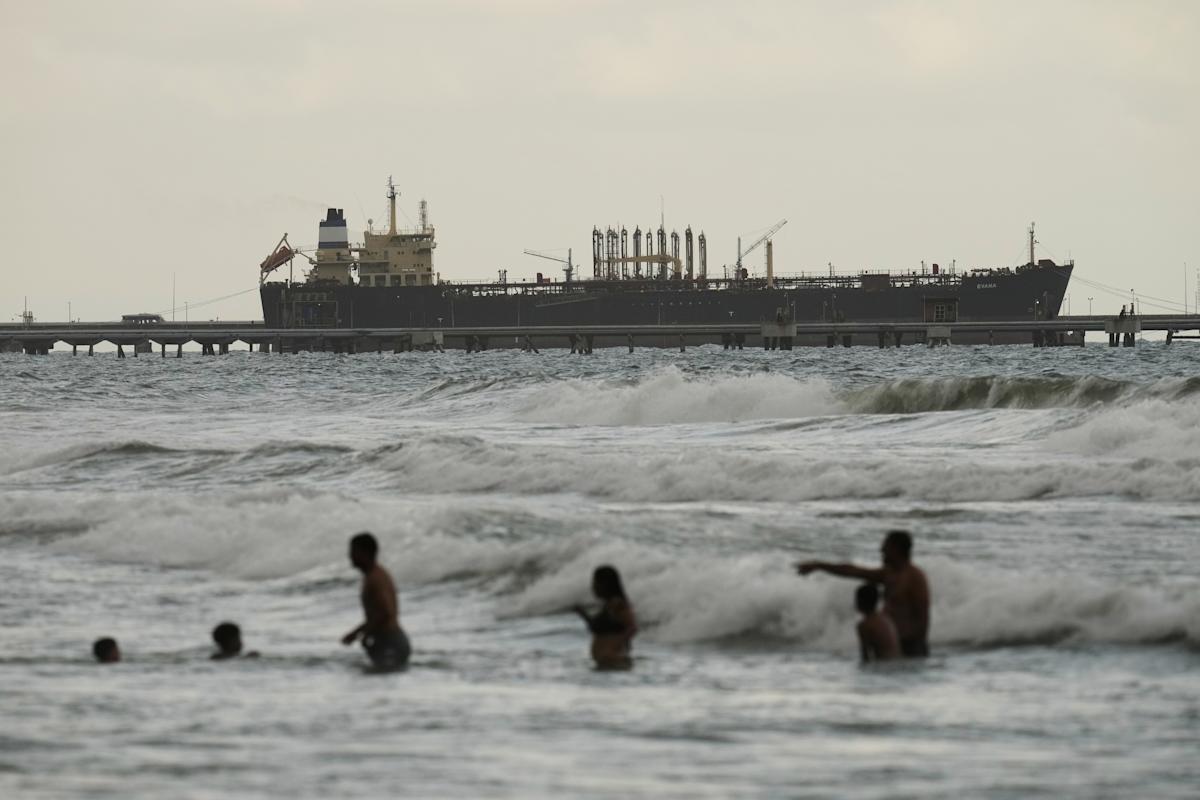
It’s been five decades since the Venezuelan government first nationalized the oil industry and nearly 20 years since former President Hugo Chávez expanded the asset seizures. The country has some of the largest oil reserves in the world, but its petroleum infrastructure has decayed amid years of mismanagement and meager investment.
Initial thoughts among U.S. oil industry officials and market analysts who spoke to POLITICO regarding a post-Maduro Venezuela focused more on questions than answers.
The administration has so far not laid out what its long-term plan looks like, or even if it has one, said Bob McNally, a former national security and energy adviser to President George W. Bush who now leads the energy and geopolitics consulting firm Rapidan Energy Group.
“It’s not clear there’s been a specific plan beyond the principal decision that in a post-Maduro, Trump-compliant regime that the U.S. companies — energy and others — will be at the top of the list” to reenter the country, McNally said. He added: “What the regime looks like, what the plans are for getting there, that has not been fully fleshed out yet.”
A central concern for U.S. industry executives is whether the administration can guarantee the safety of the employees and equipment that companies would need to send to Venezuela, how the companies would be paid, whether oil prices will rise enough to make Venezuelan crude profitable and the status of Venezuela’s membership in the OPEC oil exporters cartel. U.S. benchmark oil prices were at $57 a barrel, the lowest since the end of the pandemic, as of the market’s close on Friday.
The White House did not immediately reply to questions about its plan for the oil industry, but Trump said during Saturday’s appearance at his Mar-a-Lago estate in Florida that he expected oil companies to put up the initial investments.
“We’re going to rebuild the oil infrastructure, which requires billions of dollars that will be paid for by the oil companies directly,” Trump said. “They will be reimbursed for what they’re doing, but it’s going to be paid, and we’re going to get the oil flowing.”
However, the administration’s outreach to U.S. oil company executives remains “at its best in the infancy stage,” said one industry executive familiar with the discussions, who was granted anonymity to describe conversations with the president’s team.
“In preparation for regime change, there had been engagement. But it’s been sporadic and relatively flatly received by the industry,” this person said. “It feels very much a shoot-ready-aim exercise.”
Venezuela’s oil output has fallen to less than a third of the 3.5 million barrels per day that it produced in the 1970s, and the infrastructure that is used to tap into its 300 billion barrels of reserves has deteriorated in the past two decades.
“Will the U.S. be able to attract U.S. oilfield services to go to Venezuela?” the executive asked. “Maybe. It would have to involve the services companies being able to contract directly with the U.S. government.”
Talks with administration officials over the past several days also involved the fate of the state oil company, which is known as PdVSA, this person added.
“PdVSA will not be denationalized in some way and broken,” this person said. “Definitely it’s going to be wholesale remaking of PdVSA leadership, but at least at this point, there is no plan for denationalization or auctioning it off. It’s in the best position to keep production flowing.”
Chevron, the sole major oil company still working in Venezuela under a special license from the U.S. government, said in a statement Saturday that it “remains focused on the safety and wellbeing of our employees, as well as the integrity of our assets.
“We continue to operate in full compliance with all relevant laws and regulations,” Chevron spokesperson Bill Turenne said in a statement.
Evanan Romero, a Houston-based oil consultant involved in the effort to bring U.S. oil producers back to Venezuela, said in a text message that Saturday’s events laid the groundwork for American oil companies to return “very soon.”
Romero is part of a roughly 400-person committee, mostly made up of former employees of the Venezuelan state oil company Petróleos de Venezuela, that formed about a year ago to strategize about how to revive the country’s oil industry under a new government.
The committee, which is not directly affiliated with opposition leader María Corina Machado’s camp, is debating the role any new government should have in the oil sector. Some members favor keeping the industry under the control of the government while others contend that international oil majors would return only under a free market system, Romero said.
Ultimately, the “orderliness” in any transition will determine U.S. investment and reentry in Venezuela, said Carrie Filipetti, who was deputy assistant secretary for Cuba and Venezuela and the deputy special representative for Venezuela at the State Department in Trump’s first administration.
“If you were to see a disorderly transition, obviously I think that would make it very challenging for American companies to enter Venezuela,” said Filipetti, who is now executive director of nonpartisan foreign policy group The Vandenberg Coalition. “It’s not just about getting rid of Maduro. It’s also about making sure that the legitimate opposition comes into power. ”
Richard Goldberg, who led the White House’s National Energy Dominance Council until August, said the Trump administration could offer financial incentives to coax companies back into Venezuela. That could include the Export-Import Bank and the U.S. International Development Finance Corp., whose remit Congress expanded in December, underwriting investments to account for political and security risks.
Promoting U.S. investment in Venezuela would keep China — a major consumer of Venezuela’s oil — out of the nation and cut off the flow of the discounted crude that China buys from Venezuela’s ghost fleets of tankers that skirt U.S. sanctions.
“There’s an incentive for the Americans to get there first and to ensure it’s American companies at the forefront, and not anybody else’s,” said Goldberg.
It’s unclear how much the Trump administration could accelerate investment in Venezuela, said Landon Derentz, an energy analyst at the Atlantic Council who worked in the Obama, Trump and Biden administrations.
Many consider Venezuela a longer-term play given current low prices of $50 per barrel oil and the huge capital investments needed to modernize the infrastructure, Derentz said. But as U.S. shale oil regions that have made the country the world’s leading oil producer peter out over time, he said, it would become increasingly economical to export Venezuelan heavy crude to the Gulf Coast refineries built specifically to process it.
“Venezuela would be a crown jewel if the above-ground risk is removed. I have companies saying let’s see where this lands,” said Derentz, who served in Trump’s National Security Council during his first term. “I don’t see anything that gives me the sense that this is a ripe opportunity.”