

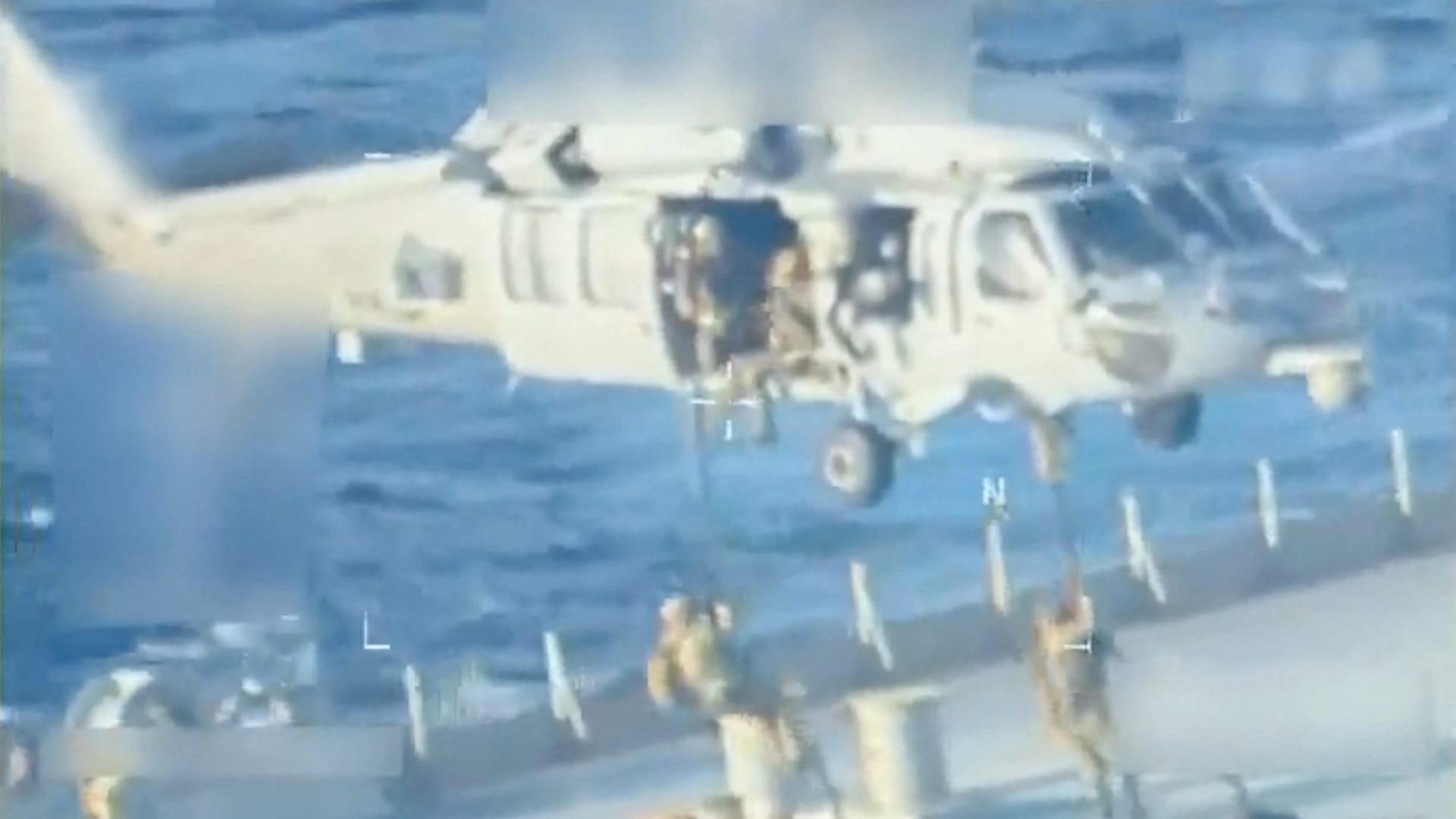
- President Trump suggested the U.S. would keep the oil from the seized Venezuelan ship, but typically seized assets are sold.
- The U.S. government often sells confiscated goods and keeps the proceeds, experts said, including recent seizures of Iranian assets
- Attorney General Pam Bondi said the ship, called Skipper, had been sanctioned for years.
After the U.S. military seized a large crude oil tanker off the Venezuelan coast, President Donald Trump suggested the ship’s contents could remain in U.S. possession.
“Well, we keep it, I guess,” Trump told reporters Wednesday during a business roundtable at the White House, hours after the Guyana-flagged Skipper was seized.
But similar seizures in the past have led to the sale of confiscated assets. The question now is where the oil from the Venezuelan ship may end up and how the proceeds will be distributed.
Matt Smith, head U.S. analyst at energy consulting firm Kpler, told CNBC that Skipper was covertly loaded with 1.1 million barrels of oil in mid-November and appeared to be headed for Cuba.
“In past instances, mainly involving Iran, the oil is sold and the US government kept the proceeds. There’s a civil asset forfeiture process,” said Bob McNally, founder and president of Rapidan Energy Group and a former White House energy advisor to President George W. Bush.
“We expect that to be followed in this case,” McNally said.
Andy Lipow, president of Lipow Oil Associates, a petroleum analysis firm, told CNBC that the U.S. has seized Iranian oil sold into the U.S. Gulf Coast on multiple occasions in recent years.
“There is a process, ultimately the USA has to indemnify anyone taking part in the transaction, which includes the oil buyer, any tankers required for the lightering operation or any of the service providers involved in the transaction,” Lipow said. Lightering is the process of transferring cargo, oil or hazardous materials from one ship to another.
“They have done it in the past, will do so again,” Lipow said.
Spokespeople for the U.S. Coast Guard and the Pentagon deferred to the White House when asked about the process of disposing of the tanker and oil. The White House, Department of Justice, and Homeland Security Department did not immediately return requests for comment.
In 2024, the U.S. seized and sold Iranian oil, generating $47 million in proceeds, some of which could be directed toward the U.S. Victims of State Sponsored Terrorism Fund, according to a statement by the U.S. Attorney’s Office for the District of Columbia earlier this year.
The U.S. Marshals Service also operates an asset forfeiture program that includes managing and selling assets seized by the DOJ. But the Marshals Service is not involved in the Venezuelan seizure, according to an agency spokesperson.
Attorney General Pam Bondi, in a post on X on Wednesday, said that the ship had been sanctioned for multiple years because of its “involvement in an illicit oil shipping network supporting foreign terrorist organizations.”
“Our investigation alongside the Department of Homeland Security to prevent the transport of sanctioned oil continues,” Bondi wrote.
Homeland Security Secretary Kristi Noem defended the seizure during testimony at a House hearing on Thursday.
“It was a successful operation directed by the president to ensure that we’re pushing back on a regime that is systematically covering and flooding our country with deadly drugs and killing our next generation of Americans,” Noem told the House Homeland Security Committee.
She touted the Coast Guard’s efforts to target drug smugglers and “those individuals that are funding it with a shadow fleet of sanctioned oil that should never be sold to benefit their profits and their pockets to kill Americans.”